 Save to Pinterest
 There's something magical about the moment you realize you can make sushi rolls at home without any fancy equipment or years of training. I discovered this while standing in my kitchen on a lazy Sunday afternoon, watching a friend effortlessly roll up vegetables in nori like she'd been doing it her whole life. Her secret wasn't technique—it was permission to stop overthinking it. Now, whenever I make these vibrant rolls, I'm reminded that the best meals are often the ones we create ourselves, with whatever we have on hand and whoever happens to be hungry.
I made these for my sister's surprise picnic last summer, packing them in a bento box with extra ginger and wasabi tucked into the corners. When we opened the box by the lake and she bit into that first roll, her eyes lit up—not because it tasted restaurant-perfect, but because it tasted like I'd put real thought into her favorite meal. That's when I understood these aren't just appetizers; they're a way of saying you care enough to make something special from scratch.
Ingredients
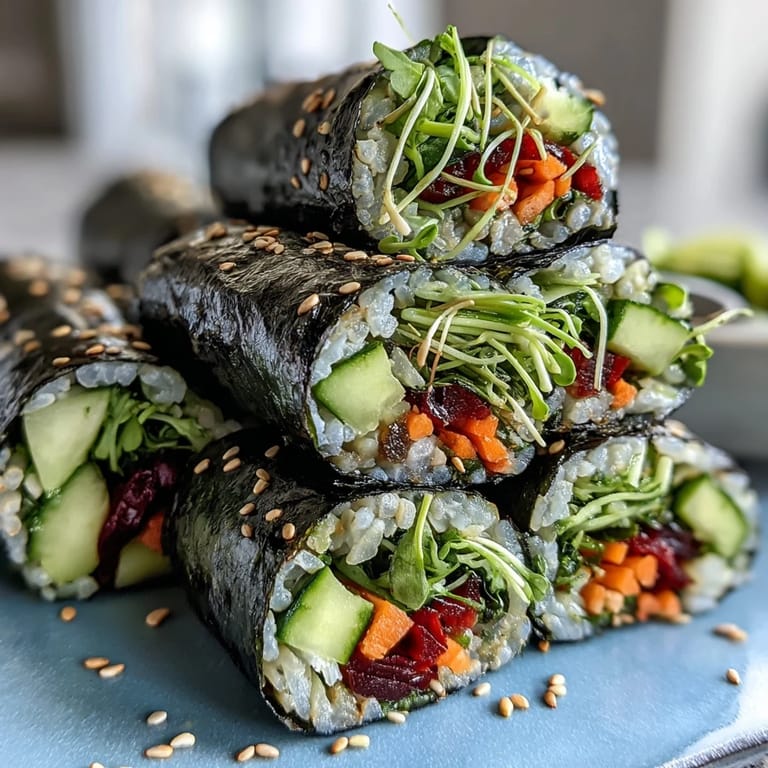
- Nori sheets: These roasted seaweed sheets are your edible wrapper, and buying the good quality kind makes an enormous difference—cheap nori can taste fishy or stale, while quality sheets taste like a gentle ocean breeze.
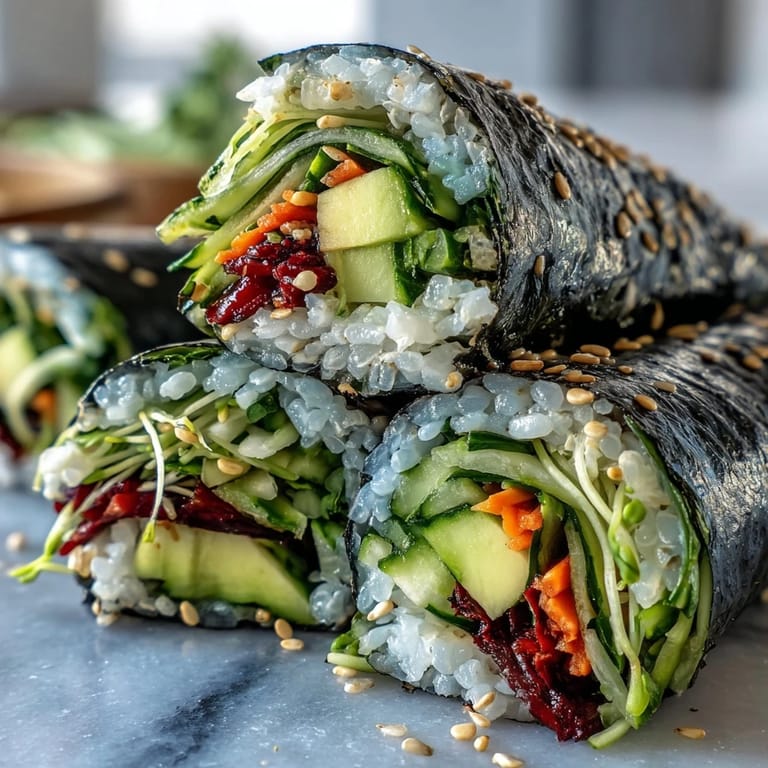
- Cucumber: Julienne it thin so it stays crisp and doesn't add extra moisture that could make your rolls soggy by the time you eat them.
- Avocado: Pick one that's perfectly ripe but still holds its shape; underripe avocado won't slice cleanly, and overripe turns to mush when you roll.
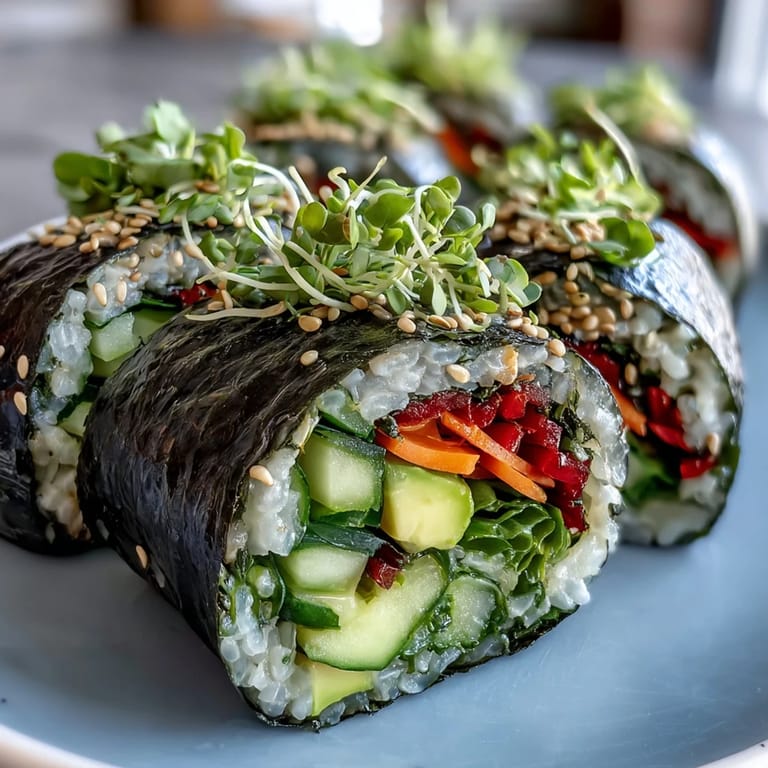
- Mixed sprouts: The crunch factor that makes people actually want to eat these—alfalfa, radish, and broccoli sprouts all bring different personality to each bite.
- Carrot: Raw and julienned, it adds a subtle sweetness and keeps its snap no matter how many rolls you make.
- Red bell pepper: The thin strips contribute color and a mild peppery flavor that balances the cool avocado beautifully.
- Sushi rice: Optional but transformative—seasoned with rice vinegar, it becomes slightly sticky so everything holds together when you roll.
- Rice vinegar: This touches the rice with subtle sourness that brings all the fresh vegetables into harmony.
- Toasted sesame seeds: They add a nutty depth and a tiny bit of crunch that makes the whole experience feel more intentional.
- Soy sauce or tamari: Your dipping liquid—tamari is the gluten-free choice if that matters to you.
Tired of Takeout? 🥡
Get 10 meals you can make faster than delivery arrives. Seriously.
One email. No spam. Unsubscribe anytime.
Instructions
- Season the rice if you're using it:
- Combine warm sushi rice with rice vinegar and gently fold it together while it cools—don't stir vigorously or you'll break down the rice grains into mush. This step takes maybe five minutes and makes an enormous difference in flavor.
- Set up your rolling station:
- Place your bamboo mat on a clean surface with one nori sheet shiny side down. Have a small bowl of water nearby because that little dab of water at the end is what seals everything shut like magic.
- Layer your base:
- Spread a thin layer of seasoned rice across the lower two-thirds of the nori, leaving about half an inch at the top and a small border on the sides. Think of it as painting with rice, not piling it on.
- Arrange your vegetables:
- Place a small handful of each vegetable—cucumber, avocado, sprouts, carrot, and bell pepper—in a horizontal line across the rice. Sprinkle sesame seeds over the top like you're blessing the whole thing.
- Roll with intention:
- Lift the bottom edge of the mat and roll the nori tightly over the filling, using the mat to guide it into a cylinder shape. When you reach the top edge, dab it with water and press gently so it seals.
- Slice with a sharp, wet knife:
- A damp knife is your secret weapon—the moisture keeps the knife from sticking to the rice and sesame seeds. Slice each roll into eight pieces with one smooth motion rather than sawing back and forth.
- Serve immediately:
- These are best eaten fresh, with little bowls of soy sauce, pickled ginger, and wasabi on the side for dipping and customizing each bite.
 Save to Pinterest
 My nephew once asked me why I made rolls instead of just giving him a salad with the same vegetables, and I realized I didn't have a logical answer—I just knew that rolling them changed something. Maybe it's the ritual of it, or the way hand-rolled food carries an invisible message that someone took time for you. Whatever it is, these rolls have become the thing my family requests, the edible proof that effort tastes better than convenience.
Building Your Perfect Roll
The beauty of nori rolls is that they're a blank canvas waiting for your preferences and whatever vegetables are currently in your refrigerator. I've made them with thin slices of cucumber in winter when little else looked fresh, and with summer heirloom tomatoes that probably shouldn't go in a sushi roll but absolutely do. The nori holds everything together while the rice acts like an edible glue, so you really can't make a wrong combination—only variations on a theme you love.
Making It Your Own
If you skip the rice entirely, these become grain-free bundles of pure vegetable crunch that feel lighter and somehow more honest. I did this once when I was trying to reduce carbs, and I actually preferred it—the vegetables had more presence without the rice cushioning them. It's a small adjustment that transforms the dish into something completely different while using the exact same filling ingredients.
Storage and Serving Suggestions
These rolls are best eaten within a few hours of rolling because the nori can soften as it sits, but honestly they're so quick to make that you can roll fresh ones whenever you want. I pack them in bento boxes for lunches, serve them as appetizers when friends come over, and sometimes just make a batch for myself because they're the kind of food that doesn't feel like a meal—it feels like a treat. They pair beautifully with a simple green salad, and a cup of jasmine tea makes the whole experience feel intentional.
- Slice your rolls just before serving so the nori stays crisp and the rice grains don't have time to release excess moisture.
- If you're making them ahead, wrap them individually in plastic wrap and store them in the coolest part of your refrigerator, but eat within four hours.
- Set out small individual bowls of dipping sauce, pickled ginger, and wasabi so everyone can customize their experience.
 Save to Pinterest
 Making nori rolls connects you to a tradition that's been perfected over centuries, but also invites you to make it entirely your own. There's something deeply satisfying about finishing a platter of rolls you made with your own hands, knowing exactly what's inside because you put it there.
Recipe FAQs
- → Do I need special equipment to make nori rolls?
A bamboo sushi mat helps achieve tight, even rolls, but a clean kitchen towel works perfectly well. The key is pressing gently while rolling to maintain shape without tearing the nori.
- → Can I prepare these ahead of time?
For best texture, assemble and serve immediately. If preparing ahead, wrap tightly in plastic wrap and refrigerate up to 4 hours—the nori may soften slightly but flavors remain fresh.
- → What vegetables work best in nori rolls?
Julienned cucumbers, carrots, and bell peppers provide excellent crunch. Avocado adds creaminess, while sprouts contribute freshness. Thin, uniform cuts ensure easy rolling and pleasant texture.
- → Are nori rolls suitable for grain-free diets?
Absolutely—simply omit the optional sushi rice and load up on extra vegetables. The nori holds everything together beautifully while keeping carbs low and nutrients high.
- → How do I prevent nori from getting soggy?
Pat vegetables dry before rolling, avoid overfilling, and serve promptly. If moisture is a concern, place a layer of crunchy sprouts or carrot between nori and softer fillings like avocado.
- → What dipping sauces pair well with vegetable nori rolls?
Traditional soy sauce or tamari enhances the savory elements. Pickled ginger adds brightness, while wasabi provides heat. Sesame oil mixed with rice vinegar creates a light, nutty dipping sauce.