 Save to Pinterest
 There's something magical about the smell of sesame oil hitting a hot wok, and I discovered this bowl on a weeknight when I was tired of the same rotation and desperate for something that felt both comforting and exciting. A friend had mentioned how she'd been building these noodle bowls at home instead of ordering takeout, and I was skeptical until I made my first batch and realized how the warm chicken, cool vegetables, and that glossy sauce created this perfect balance that somehow felt like a restaurant secret I could now make in my own kitchen.
I made this for my sister when she mentioned she was bored with her lunch rotation, and watching her face light up when she tasted that first forkful of noodles coated in sauce reminded me why I love feeding people—it's not really about the food, it's about that small moment where someone realizes they don't have to settle for ordinary.
Ingredients
- Boneless, skinless chicken breast or thighs: Thighs stay more tender than breast meat, but if you prefer leaner protein, slice the breast thin so it cooks quickly without drying out.
- Tamari or low-sodium soy sauce: Tamari is naturally gluten-free and has a deeper, slightly sweeter flavor than regular soy sauce—worth keeping on hand if you cook Asian-inspired meals often.
- Fish sauce: This is the ingredient people are nervous about until they taste how it pulls everything into focus; if you're vegetarian, skip it or use a vegetarian fish sauce alternative.
- Rice vinegar: This brings a gentle acid that keeps the sauce from being too heavy, and it's milder than white vinegar so it won't overpower.
- Honey: A touch of sweetness that rounds out all the savory and sour notes, creating that addictive balance you taste in good takeout.
- Toasted sesame oil: The nutty intensity here is non-negotiable—it's what makes this taste like it came from somewhere with real culinary tradition.
- Neutral oil: This carries all the garlic and ginger flavor without competing with the sesame oil's personality.
- Garlic and ginger: Fresh ginger adds brightness and warmth; don't skip it if you can help it, though the recipe works without it if that's what you have.
- Rice noodles: They have a delicate chew that soaks up the sauce beautifully, but wheat noodles or even ramen work if that's what's in your pantry.
- Fresh vegetables: The cool crunch of raw vegetables is what keeps this bowl from feeling one-note; they're not just garnish, they're the textural backbone.
- Sesame seeds: Toasting them yourself takes two minutes in a dry pan and makes them taste infinitely better than pre-toasted, trust me.
Tired of Takeout? 🥡
Get 10 meals you can make faster than delivery arrives. Seriously.
One email. No spam. Unsubscribe anytime.
Instructions
- Make your sauce first:
- In a medium bowl, whisk together tamari, fish sauce, rice vinegar, honey, sesame oil, neutral oil, minced garlic, and ginger until it emulsifies into something glossy and gorgeous. This is the moment where individual ingredients become something greater than themselves, so take a second to smell it and appreciate what you've just created.
- Marinate the chicken while you cook the noodles:
- Set aside half the sauce in a separate bowl for serving later, then toss the sliced chicken in the remaining half and let it sit for about 15 minutes—this is enough time to get the rice noodles going in boiling water. The chicken will already taste like something special before it even hits the pan.
- Cook the noodles to just tender:
- Follow the package instructions (usually 4-5 minutes for rice noodles), then drain and rinse with cold water so they don't clump together into a starchy mass. This step matters more than you'd think.
- Sear the chicken until the edges turn golden:
- Heat a large skillet or wok over medium-high heat and add the marinated chicken pieces; you'll hear them hit the hot pan with a satisfying sizzle. Cook for 5-7 minutes, stirring occasionally, until they're cooked through and the exterior has some color, then move them to a plate.
- Assemble your bowls with intention:
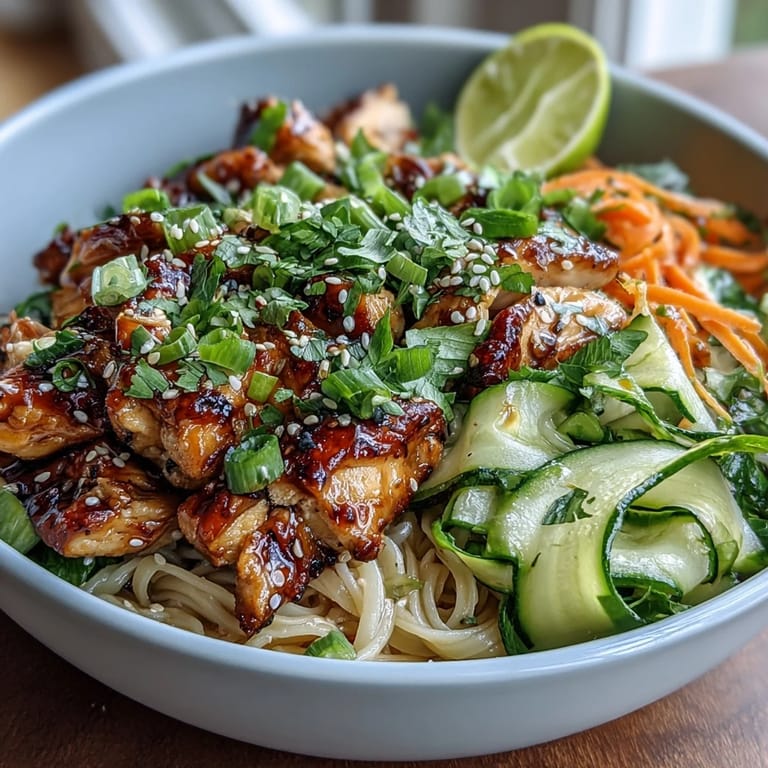
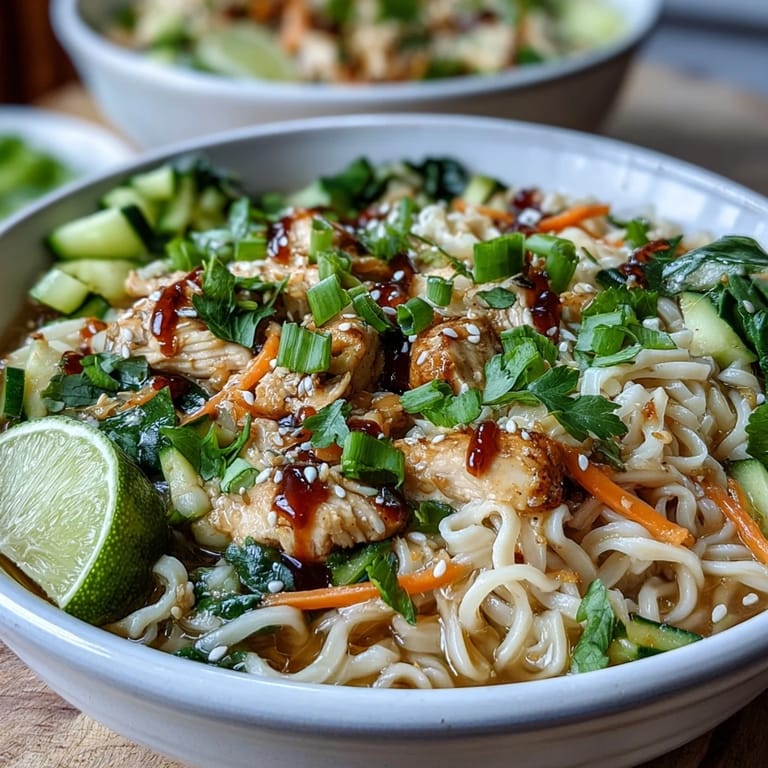
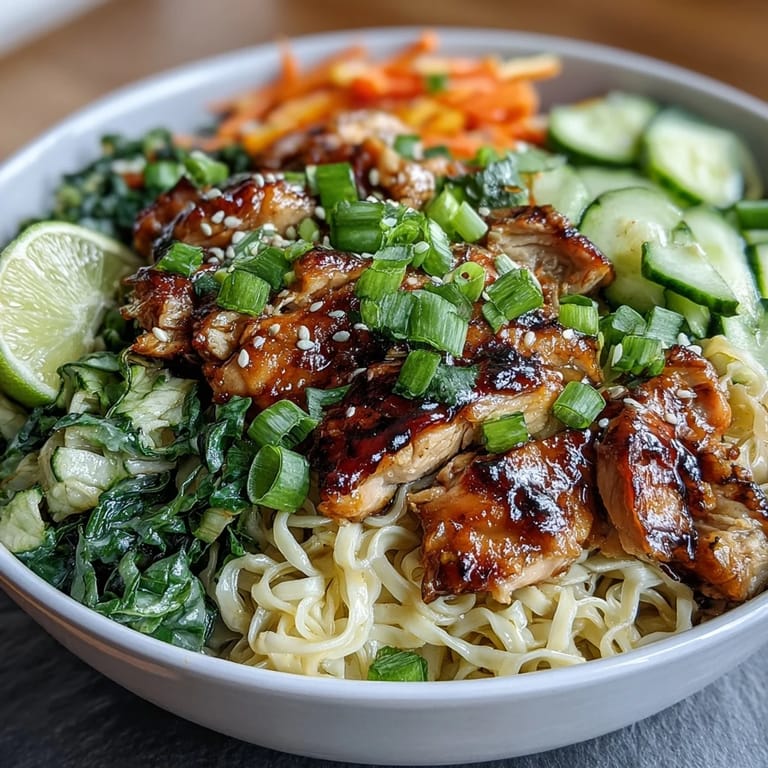
- Divide noodles among four bowls, then arrange the cooked chicken and all your fresh vegetables in little sections over the top—this isn't just practical, it's pretty and makes eating feel like a moment instead of a chore. Leave a little space in the center so the sauce can pool.
- Finish with sauce, herbs, and brightness:
- Drizzle that reserved sauce over everything, scatter cilantro and toasted sesame seeds on top, and finish with a squeeze of fresh lime that makes the whole bowl wake up. Serve right away while the noodles are still warm and the vegetables still have their snap.
 Save to Pinterest
 One evening, a friend who normally eats very simply told me this bowl had changed how she thought about home cooking—that she'd spent years assuming anything that tasted this good required more skill or ingredients than she possessed. Somehow, sharing that moment mattered more than the recipe itself.
Why This Bowl Became My Go-To
There was a period where I was eating this two or three times a week because I realized it checks every box at once: it's healthy enough to not feel indulgent, it tastes indulgent enough to feel like a treat, and it's flexible enough that I can use whatever vegetables are actually in my fridge instead of shopping for a specific list. The sauce is what does the heavy lifting here—once you understand how it works, you can apply the same logic to other proteins and noodles.
Playing with Heat and Flavor
I started making this recipe without the chili flakes, then realized I was reaching for hot sauce at the table anyway, so now I either stir chili flakes directly into the reserved sauce or leave a small bowl on the side so people can adjust to their own preference. The thing about this dish is that it's already flavorful enough to stand on its own, but a little heat makes the other flavors pop—it's not about making it spicy, it's about depth.
Vegetables, Substitutions, and Improvisation
Once you understand the structure of this bowl, you can swap almost anything in: snap peas instead of cucumber, shredded cabbage instead of bell pepper, edamame for extra protein, whatever you have or whatever you're in the mood for. The vegetables are really the canvas here, and I've made this same sauce work with tofu, shrimp, pork, and even just vegetables when I'm eating plant-based for a stretch.
- Keep the ratio of warm (chicken) to cool (vegetables) to sauce roughly balanced so no single element overpowers.
- If you want to make this vegetarian, use tamari, replace the fish sauce with extra tamari or a good quality soy sauce, and add a splash of miso paste for that umami depth.
- Prep all your vegetables in the morning and store them in containers so assembly at dinner takes literally three minutes.
 Save to Pinterest
 There's something about a meal that comes together quickly but tastes like it took real thought that reminds me why I cook at all. This bowl has become the recipe I make when I want to feel capable and present, which is really what any good recipe should do.
Recipe FAQs
- → What type of noodles work best?
Dried rice noodles are preferred for their texture and ability to absorb the sauce, though wheat noodles can be used as an alternative.
- → Can I use chicken thighs instead of breasts?
Yes, boneless, skinless chicken thighs offer extra juiciness and flavor when thinly sliced and marinated.
- → How long should the chicken marinate?
Marinating the chicken for about 15 minutes allows the flavors to infuse without overpowering the meat.
- → What can I substitute for fish sauce?
For a vegetarian option, omit fish sauce or replace it with a vegetarian-friendly savory sauce like miso or tamari alone.
- → How to add heat to the dish?
Incorporate chili flakes or Sriracha either in the marinade or as a topping to adjust the spiciness to your taste.
- → Are there any gluten-free considerations?
Use gluten-free tamari and certified gluten-free noodles to make this bowl suitable for gluten-sensitive diets.