 Save to Pinterest
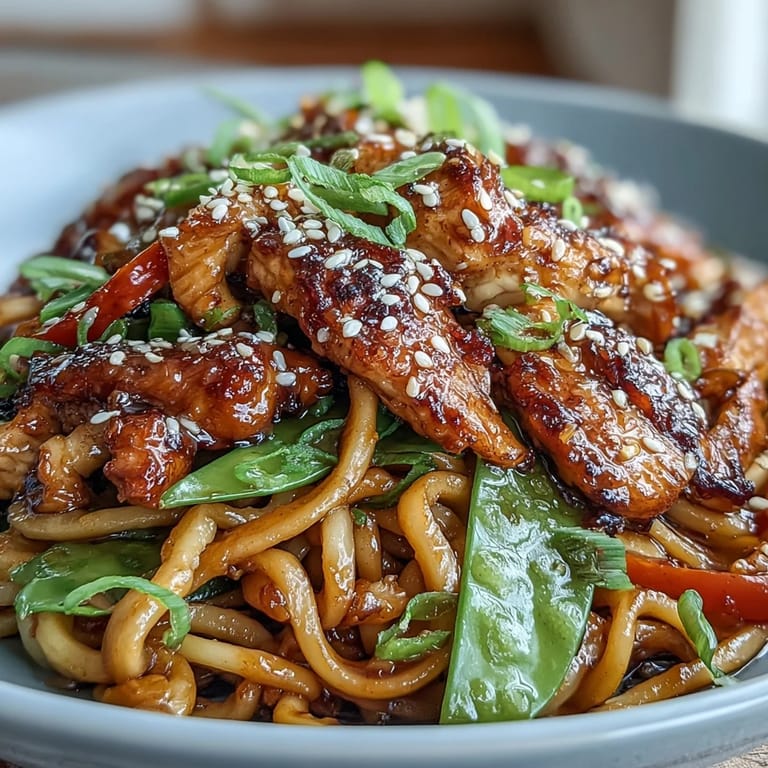
 My cousin called me one Tuesday asking for something quick but impressive—she was feeding her kids after soccer practice and didn't want the usual boxed stuff. I threw together what I had in the pantry: chicken, noodles, and a handful of vegetables, then made a sauce that tasted like takeout but took maybe ten minutes. The kids actually asked for seconds, which never happens, and that's when I knew this bowl had staying power.
Last summer, I made this for a small dinner party and watched my friend lean over her bowl and actually close her eyes after the first bite. She later told me the sesame smell had been wafting from the kitchen the whole time I was cooking, and she'd been anticipating it. That moment taught me that good food isn't just about taste—it's about the whole experience, the anticipation, the sizzle.
Ingredients
- Chicken breast or thighs (500 g / 1 lb), thinly sliced: Thighs stay juicier than breast if you're not careful with timing, but breast works perfectly if you slice it thin and don't overcook—I've learned this the hard way.
- Udon, soba, or rice noodles (250 g / 9 oz): Udon gives you chew, soba brings earthiness, rice noodles stay light—pick based on your mood.
- Red bell pepper, thinly sliced (1): The sweetness balances the savory sauce and the color makes the bowl look alive.
- Carrot, julienned (1 medium): Cut them thin so they cook in the same time as the other vegetables and add a subtle sweetness.
- Sugar snap peas, trimmed (100 g / 3.5 oz): They stay crisp even with quick cooking, which is what you want here.
- Spring onions, sliced (2): Add these at the end so they keep their bite and fresh flavor.
- Low-sodium soy sauce (60 ml / 4 tbsp): Low-sodium lets you taste the other flavors instead of just salt.
- Brown sugar (2 tbsp): It dissolves into the sauce and creates that sweet-savory balance that makes you want another bite.
- Toasted sesame oil (1 tbsp): This is non-negotiable—regular sesame oil tastes flat by comparison, and the toasted kind brings nutty depth.
- Rice vinegar (1 tbsp): A small amount brightens everything without making it taste acidic.
- Fresh ginger, grated (2 tsp): Grate it yourself right before cooking so you get the spicy bite, not the dull flavor from the jar.
- Garlic, minced (2 cloves): Mince it fine so it distributes evenly through the sauce.
- Cornstarch (1 tsp, optional): Use this only if your sauce seems too thin, but honestly it often isn't necessary.
- Toasted sesame seeds (2 tbsp): Toast them yourself if you can—they taste alive compared to pre-toasted.
- Fresh coriander or cilantro, chopped: The brightness at the end matters more than you'd think.
- Lime wedges (optional): A squeeze transforms the whole thing if someone wants extra zing.
Tired of Takeout? 🥡
Get 10 meals you can make faster than delivery arrives. Seriously.
One email. No spam. Unsubscribe anytime.
Instructions
- Get the noodles going:
- Boil water and cook your noodles according to the package—don't overcook or they'll turn mushy when you toss them later. Drain them well and rinse under cold water so they don't stick together.
- Build your sauce:
- Whisk soy sauce, brown sugar, sesame oil, rice vinegar, ginger, and garlic in a small bowl until the sugar dissolves. If you're worried about thickness, add cornstarch now, but I usually skip it.
- Heat your pan and cook the chicken:
- Get your skillet or wok hot over medium-high heat, add a splash of oil, then lay in the chicken slices in a single layer. Let them brown for 2-3 minutes on the first side—don't move them around—then flip and finish cooking through, about 2 more minutes total. You want them golden, not pale.
- Stir-fry the vegetables:
- Push the chicken to the side, add a little more oil if the pan looks dry, then add bell pepper, carrot, and snap peas. Toss for 2-3 minutes until they're tender on the outside but still have a bit of snap inside.
- Bring it all together:
- Return the chicken to the pan, pour in your sauce, and toss everything until everything's coated. Let it simmer for 1-2 minutes so the sauce clings to everything and thickens slightly.
- Add the noodles and spring onions:
- Toss in the cooked noodles and spring onions, mixing gently until everything is heated through and the noodles are coated with sauce.
- Finish and serve:
- Divide among bowls and scatter sesame seeds, fresh cilantro, and lime wedges on top. This is where the dish gets its personality.
 Save to Pinterest
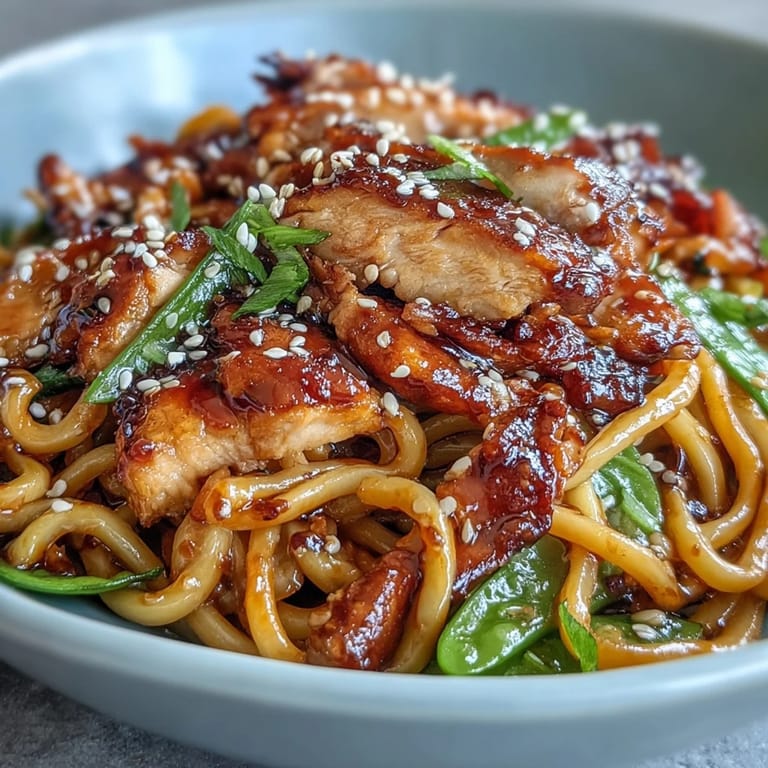
 There's something about handing someone a steaming bowl of noodles and watching them take that first hungry slurp. It's simple, but it's also generous—you've fed them something that tastes like you put care into it, even though it took less time than ordering delivery would have.
The Sesame Sauce Philosophy
The magic of this bowl lives in the sauce, and I learned this by accident when I once made it without the ginger and wondered why it tasted so flat. The sauce should taste like something you'd find at a restaurant—slightly sweet, deeply savory, with a nutty undertone and a whisper of heat. If yours doesn't taste like that before it hits the noodles, adjust it. Brown sugar versus regular sugar changes the depth, toasted sesame oil versus regular is the difference between forgettable and memorable, and fresh ginger beats jarred every single time.
Variations That Work
I've made this with tofu for vegetarian friends and honestly, it's just as satisfying—press the tofu first so it browns instead of steams. Broccoli, mushrooms, snap peas, whatever is in your fridge works; the sauce ties everything together. Some people add a touch of chili flakes for heat or extra brown sugar if they like it sweeter, and both make sense depending on your mood.
Timing and Meal Prep
This is the kind of dish that feels fancy but moves fast—you're looking at maybe 35 minutes from start to finish, most of which is just boiling water. You can prep your vegetables in advance if you're organized, but honestly slicing as you go isn't much slower. The sauce keeps in the fridge for a few days, so you could make double and use it on leftover chicken or roasted tofu later in the week.
- Cook the noodles while your pan heats so nothing sits around waiting.
- If you're cooking for a crowd, double the batch and use two pans instead of trying to cram everything into one.
- This reheats beautifully the next day if you have leftovers, though it rarely happens in my kitchen.
 Save to Pinterest
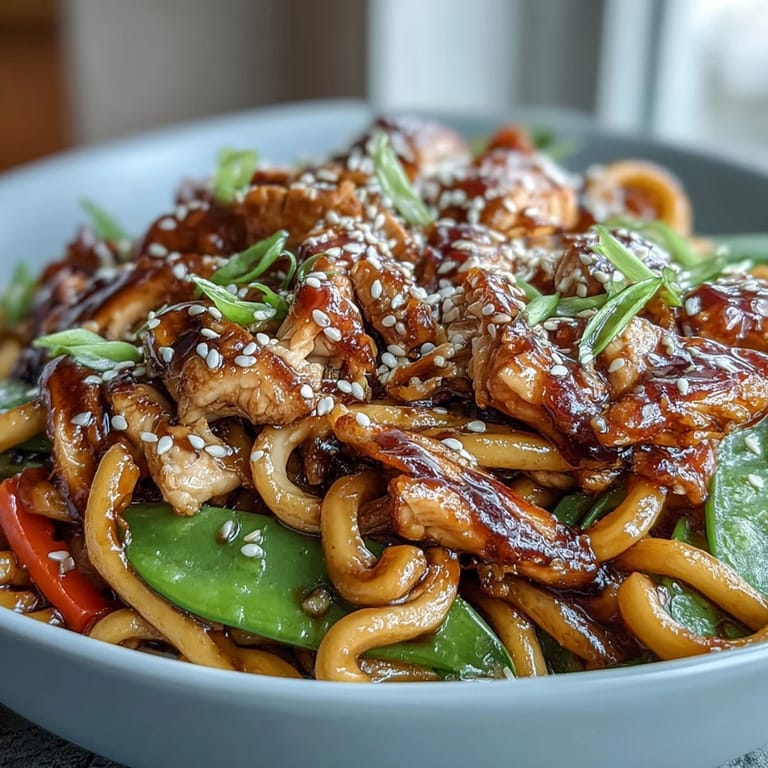
 This bowl has become my answer to the question what's for dinner when I have 20 minutes and want something that feels like actual food. It's reliable, it's quick, and somehow it always tastes like you tried harder than you actually did.
Recipe FAQs
- → What types of noodles work best?
Udon, soba, or rice noodles all complement the flavors well and provide varying textures to the dish.
- → Can I substitute the chicken protein?
Tofu makes a great vegetarian alternative, offering a similar texture and absorbing the sauce’s flavors nicely.
- → How do I achieve the perfect sauce consistency?
Use cornstarch to thicken the sauce by mixing it in before simmering gently until the sauce coats the ingredients evenly.
- → What vegetables enhance the flavor and texture?
Bell peppers, carrots, snap peas, and spring onions provide crispness and freshness that balance the rich sauce.
- → Are there options for gluten-free preparation?
Yes, replace soy sauce with tamari and choose gluten-free noodles to keep the dish suitable for gluten sensitivities.