 Save to Pinterest
 My grandmother had this way of making bread pudding that seemed to defy logic—she'd let bread go deliberately stale, then somehow transform those hard cubes into something so tender and custard-soaked that people would ask for seconds before finishing their first bite. I watched her do it a hundred times before I finally understood it wasn't magic, just patience and the right ratio of cream to eggs. Now whenever I have a half-eaten loaf sitting on the counter, I think of her kitchen and know exactly what it's meant to become.
I made this for a dinner party on a cold November evening, and I remember the smell filling the whole house about halfway through baking—that golden, caramelized, almost brioche-like aroma that had everyone wandering toward the kitchen asking what was happening. When I pulled it out and the sauce was still warm in its little pan, something shifted in the room. It became the kind of moment where a simple dessert feels like generosity.
Ingredients
- Stale bread, cubed (6 cups): French bread or brioche work beautifully because they have enough structure to hold custard without turning to mush, and their slight sweetness complements the spices perfectly.
- Raisins (1 cup): These plump up as they soak, adding little bursts of sweetness throughout—soak them in warm water for 5 minutes first if you want them extra tender.
- Whole milk and heavy cream (2 cups plus 1 cup): The combination gives you richness without being overwhelming; using all cream makes it too heavy, all milk too thin.
- Eggs (4 large): These bind everything together and give the pudding that custard texture that makes it feel almost like eating clouds.
- Granulated sugar (3/4 cup): Sweetens the custard and helps it set as it bakes.
- Vanilla extract (2 tsp): Use real vanilla if you can; it makes a noticeable difference in the flavor depth.
- Cinnamon and nutmeg (1/2 tsp and 1/4 tsp): These warm spices are essential—they're what make bread pudding taste like bread pudding and not just custard-soaked bread.
- Salt (1/4 tsp): A small amount enhances all the other flavors and prevents the pudding from tasting flat.
- Unsalted butter, melted (2 tbsp plus extra for greasing): Adds richness to the custard and a subtle richness to every bite.
Tired of Takeout? 🥡
Get 10 meals you can make faster than delivery arrives. Seriously.
One email. No spam. Unsubscribe anytime.
Instructions
- Prepare your stage:
- Preheat your oven to 350°F and generously butter a 9x13 inch baking dish—you want it slick enough that the pudding releases easily when it's done.
- Layer the bread and raisins:
- Spread your cubed bread evenly in the dish, then scatter raisins over the top so they're distributed throughout rather than sinking to the bottom.
- Build the custard:
- In a large bowl, whisk together the milk, cream, eggs, sugar, vanilla, cinnamon, nutmeg, salt, and melted butter until everything is smooth and the sugar has mostly dissolved. This is where the magic happens—whisking incorporates air that helps the pudding rise.
- Soak the bread:
- Pour the custard slowly and evenly over the bread, then use your fingers or the back of a spoon to gently press the bread down so it absorbs the liquid. Let it sit for about 10 minutes—this gives the bread time to drink in the custard before it hits the heat.
- Bake to golden:
- Slide it into the oven for 40 to 45 minutes until the top is puffed and golden and a knife inserted in the center comes out clean. It will jiggle slightly when you move it—that's perfect, it will set as it cools slightly.
- Make the sauce while it bakes:
- In a small saucepan, combine the cream, sugar, and butter over medium heat, stirring gently until the sugar dissolves and the mixture begins to simmer. Remove from heat, stir in vanilla and a pinch of salt, then let it cool for just a minute or two so it's warm but not scalding.
- Serve with warmth:
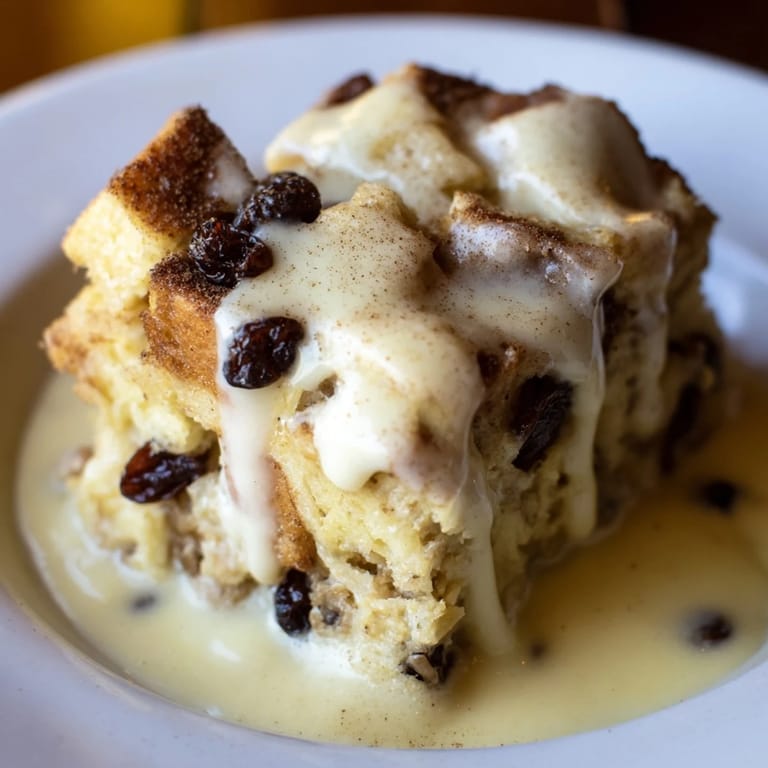
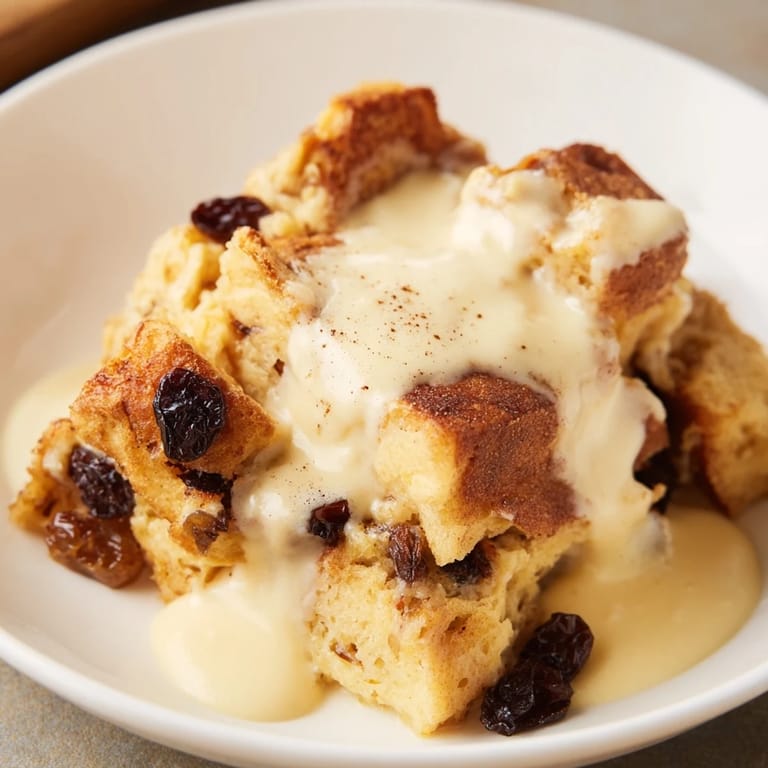
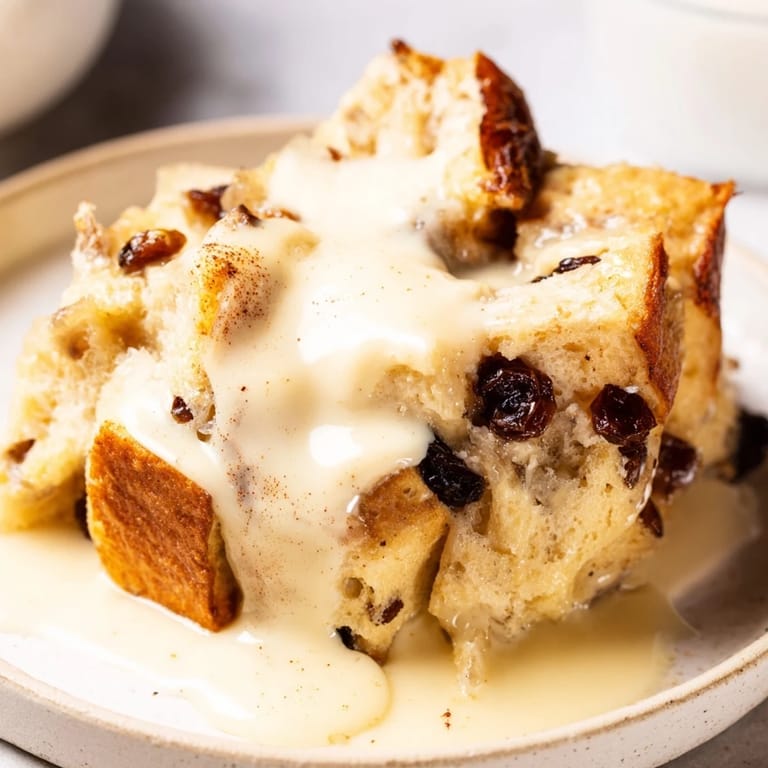
- Spoon the warm pudding onto plates and drizzle generously with the sauce, letting some pool around the edges. It's best eaten while still warm, when the custard is silky and the flavors are most alive.
 Save to Pinterest
 There was an evening when a friend who claimed to be indifferent to desserts asked for the recipe after one bite, and I realized that bread pudding isn't really about impressing anyone—it's about creating a moment where simple ingredients and a little time turn into something worth remembering.
Why Stale Bread Matters
Fresh bread has too much moisture and will turn into a soggy mess rather than absorbing the custard properly. Stale bread has a firmer structure that can soak up liquid without losing its integrity. I learned this the hard way when I tried to use a crusty baguette I'd just baked—it fell apart into nothing. Now I deliberately leave bread out for a day or two, and I'm always surprised how this small act of waiting transforms it into something better than it started as.
Flavor Variations and Substitutions
The raisins aren't written in stone—I've swapped them for chopped dates, dried cranberries, even scattered chocolate chips, and each version feels like its own distinct dessert. A splash of bourbon or rum added to either the custard or the sauce adds a warmth that feels sophisticated without being obvious. The spices can shift too; I once replaced half the nutmeg with cardamom and the pudding tasted like it had traveled somewhere exotic.
Making It Your Own
The beauty of bread pudding is that it's forgiving and adaptable, which means you can adjust it to what you have on hand or what you're in the mood for. The base custard stays the same, but the bread type, the dried fruit, the spices—these are all invitations to make it personal. One time I used panettone instead of regular bread and the pudding had this subtle honey-citrus note that stayed with me for weeks.
- Don't feel locked into one type of bread; challah, panettone, leftover croissants, or even regular sandwich bread all work beautifully.
- The sauce can be made ahead and gently reheated just before serving, which is a small mercy if you're cooking for guests.
- Leftovers keep in the refrigerator for up to three days and can be gently warmed in a low oven or the microwave without losing their texture.
 Save to Pinterest
 This is the kind of dessert that teaches you something about cooking—that sometimes the most elegant things come from using what you already have, and that taking time with something simple is where the real magic lives. It's worth making often.
Recipe FAQs
- → Can I use different bread types for this dish?
Yes, French bread or brioche is recommended for texture, but other stale breads work well too.
- → What alternatives exist for raisins in this dish?
Dried cranberries, chopped dates, or chocolate chips can be substituted depending on your preference.
- → How do spices affect the overall flavor?
Cinnamon and nutmeg add warmth and depth, complementing the vanilla and enhancing the custard’s richness.
- → Is it necessary to soak the bread before baking?
Soaking ensures the bread absorbs the custard fully, resulting in a moist and tender texture after baking.
- → How should the warm sauce be served?
The cream-based sauce is drizzled warm over the baked pudding to add creaminess and a subtle vanilla aroma.
- → Can leftover servings be reheated?
Leftovers can be gently reheated in the oven or microwave to restore softness and warmth.