 Save to Pinterest
 My grandmother kept a tin of shortbread on the kitchen counter, and the moment I'd visit, she'd open it with this knowing smile as if she'd been waiting for me to arrive. The butter would catch the afternoon light, and I'd watch her dunk pieces into strong tea, letting them soften just enough before taking a bite. Years later, I realized I was chasing that same crumbly, melt-in-your-mouth texture in my own kitchen—and when I finally nailed it, I understood why she never bought store-bought.
I made these for my neighbor after she'd had a rough week, and watching her face when she tasted one—that moment when you see someone's shoulders drop—reminded me that the best recipes are the ones that taste like someone cared.
Ingredients
- Unsalted butter, softened (1 cup / 225 g): Room temperature is non-negotiable here; it creams into fluffy clouds, which is what gives these their tender crumb.
- Granulated sugar (½ cup / 100 g): This isn't a sweet cookie—sugar is just there to balance the butter, so don't be tempted to add more.
- All-purpose flour (2 cups / 240 g): Measure by weight if you can; too much flour makes them tough and grainy instead of sandy.
- Cornstarch (¼ cup / 30 g): This is the secret ingredient that replaces some flour and gives you that signature shortbread texture—tender without being crumbly.
- Fine sea salt (¼ tsp): Just a whisper to make the butter sing and keep them from tasting one-dimensional.
Tired of Takeout? 🥡
Get 10 meals you can make faster than delivery arrives. Seriously.
One email. No spam. Unsubscribe anytime.
Instructions
- Prep and preheat:
- Set your oven to 325°F and line a baking sheet with parchment—this low temperature is crucial because shortbread shouldn't brown; you want pale golden edges and a pale heart. Rushing the heat will dry them out.
- Cream butter and sugar:
- Beat them together until the mixture looks light, fluffy, and almost mousse-like; this takes about 2–3 minutes. This is where air gets trapped, and that air is what makes them tender.
- Bring it together gently:
- Sift in the flour, cornstarch, and salt, then mix just until the dough comes together—overworking develops gluten, and that makes them tough. Stop as soon as you don't see dry bits.
- Press and score:
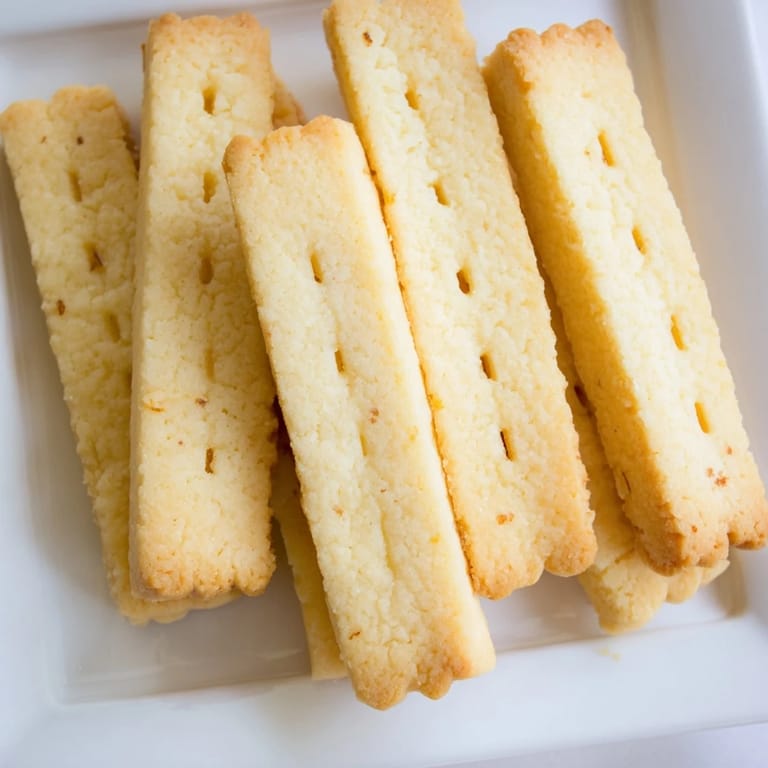
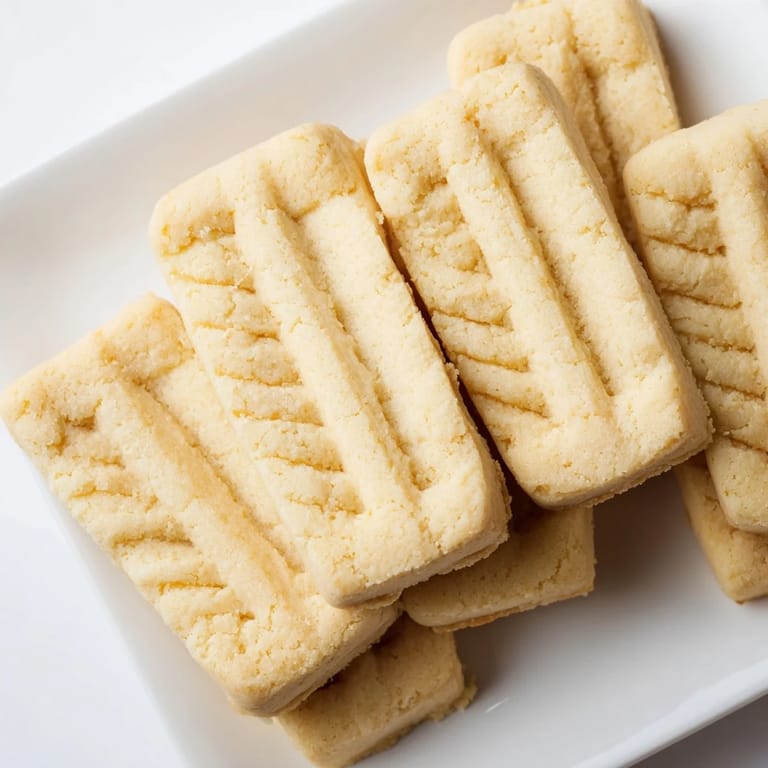
- Press the dough evenly into an 8x8-inch pan or onto your baking sheet into a ½-inch rectangle, then score it with a sharp knife into wedges or fingers and prick each piece lightly with a fork. This gives them a professional look and helps them bake evenly.
- Bake low and slow:
- Bake for 22–25 minutes until the edges are just pale golden but the center looks barely set; they'll firm up as they cool. If they start browning, your oven might run hot—tent them loosely with foil.
- Cool and cut:
- Let them rest in the pan for 5 minutes so they set enough to cut cleanly, then carefully cut along the scored lines. Move them to a cooling rack to firm up completely.
 Save to Pinterest
 There's a moment halfway through cooling when the kitchen smells like pure butter and you know you've got something special. My partner once caught me sneaking a still-warm piece off the rack, and instead of scolding me, he just laughed and stole one too.
Why This Recipe Works
Shortbread is a study in restraint—no vanilla, no baking powder, no eggs, just butter, sugar, flour, and a pinch of cornstarch. That simplicity is exactly why it works. When you use good butter and don't overwork the dough, you're basically making structured butter that happens to be shaped like a cookie, and that's the dream.
The Secret to Texture
The cornstarch replaces about 10% of the flour, and that small swap completely changes the game. Without it, you'd have a more flour-forward cookie that's denser and tougher; with it, you get that sandy, melt-in-your-mouth crumb that makes people close their eyes and go quiet. It's a humble ingredient that does heavy lifting.
Variations and Moments of Creativity
Shortbread is a canvas if you want it to be, but it's also perfect as-is. I've dipped mine in melted dark chocolate, stirred lemon zest into the dough on an impulse, and even pressed a tiny dab of jam into the center before baking—each version felt special in its own way, like I was personalizing a classic.
- For citrus brightness, add 1 teaspoon of finely grated lemon or orange zest to the creamed butter and sugar.
- Dip cooled cookies in melted chocolate or drizzle for a fancy touch that takes 30 seconds.
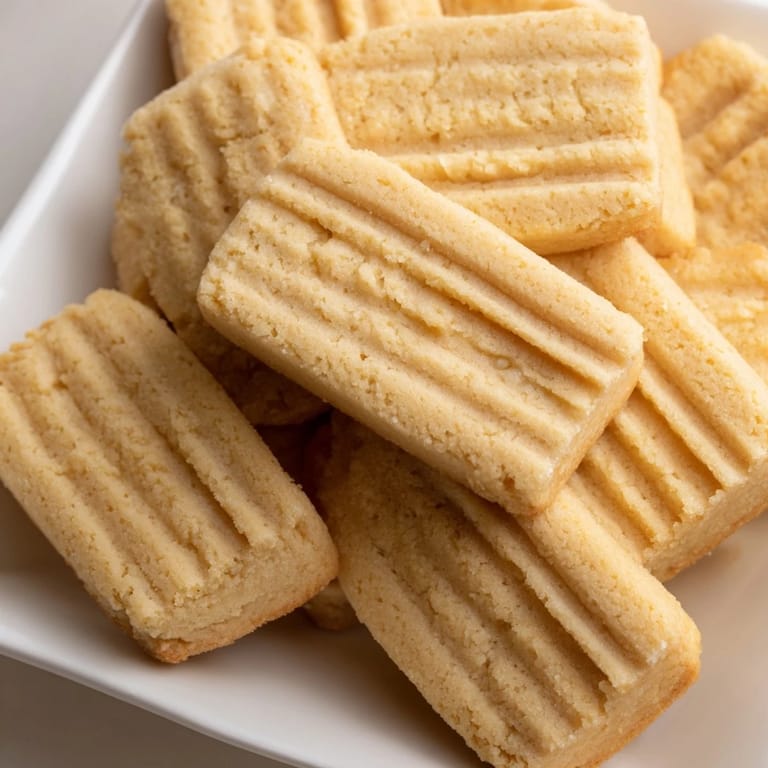
- Store in an airtight container for up to a week, and if they last that long, you're stronger than I am.
 Save to Pinterest
 These cookies remind me that the best recipes don't need to be complicated to be memorable. Make them, share them, and let them become your own tradition.
Recipe FAQs
- → What gives shortbread its crumbly texture?
The combination of butter and cornstarch creates a tender, crumbly texture by inhibiting gluten formation and adding softness.
- → How should you shape the dough before baking?
Press the dough evenly into a pan or form a rectangle on a baking sheet, then score into wedges or fingers before baking.
- → Why is it important not to brown the shortbread edges?
Keeping the edges pale golden ensures the shortbread remains tender and prevents a dry, hard texture.
- → Can citrus zest be added to this dough?
Yes, adding finely grated lemon or orange zest gives a fresh, fragrant variation to the buttery base.
- → How should shortbread be stored to keep freshness?
Store in an airtight container at room temperature to preserve crispness for up to one week.