 Save to Pinterest
 The first time I made funnel cakes at home, I was standing in my kitchen at 7 AM on a Saturday, holding a kitchen funnel like I'd just discovered some sort of culinary secret weapon. My daughter had eaten one at the county fair the week before and couldn't stop talking about it, so I decided to attempt the magic myself. What started as a slightly chaotic experiment—flour everywhere, oil sputtering, me moving the funnel in what I thought was artistic swirls—somehow produced the most delightfully lacy, golden cakes that actually tasted like the real deal. Now they're the one dessert I can make that gets everyone gathered around the kitchen without being asked.
I remember my neighbor stopping by unexpectedly one Sunday afternoon, and instead of the usual awkward small talk, I had her standing at the stove with me watching the oil heat up. We made three batches that afternoon while her kids and mine took turns picking out powdered sugar designs to dust on top—one insisted on a smiley face, another went for what she called "sugar snow." That afternoon turned into one of those spontaneous kitchen moments that somehow became more memorable than the fancy dinner I'd planned for later that week.
Ingredients
- All-purpose flour (2 cups): This is your base, and it needs to be measured right—spoon into the measuring cup and level it off rather than scooping directly from the bag, or you'll end up with dense, heavy cakes.
- Granulated sugar (2 tablespoons): Just enough to give the batter subtle sweetness without making them taste like dessert before the powdered sugar hits.
- Baking powder (1 teaspoon): This is what makes them airy and delicate inside, so don't skip it or substitute baking soda.
- Salt (1/2 teaspoon): Acts as a flavor amplifier for everything else in the batter.
- Large eggs (2): These bind everything together and help create that light, tender crumb.
- Whole milk (1 1/2 cups): Use whole milk if you can—it gives a richer batter that fries up more beautifully than low-fat versions.
- Vanilla extract (1 teaspoon): A small touch that adds warmth and depth without being obvious.
- Vegetable oil (about 1 quart): Choose a neutral oil that can handle high heat; you want enough to maintain consistent temperature as you fry.
- Powdered sugar: This is your finishing flourish—don't be shy with it, and make sure it's fresh because old powdered sugar can clump.
Tired of Takeout? 🥡
Get 10 meals you can make faster than delivery arrives. Seriously.
One email. No spam. Unsubscribe anytime.
Instructions
- Mix the dry ingredients:
- In a large bowl, whisk together the flour, sugar, baking powder, and salt until everything is evenly combined. This step prevents baking powder clumps from hiding in the final batter.
- Beat and combine the wet ingredients:
- In a separate bowl, crack the eggs and beat them lightly, then whisk in the milk and vanilla until well blended. This ensures the eggs are fully incorporated before meeting the dry ingredients.
- Create the batter:
- Pour the wet mixture into the dry ingredients while whisking gently until just combined—you're looking for a smooth, pourable consistency, like thick pancake batter. If it seems too thick, add a splash more milk; too thin, and the cakes won't hold their lacy shape.
- Heat the oil:
- Heat the oil:
- Pour oil into your skillet or pot to a depth of 2 inches and let it come up to 375°F, which should take about 5 minutes. Use a thermometer here—guessing usually results in either greasy or too-dark cakes.
- Fry in spirals:
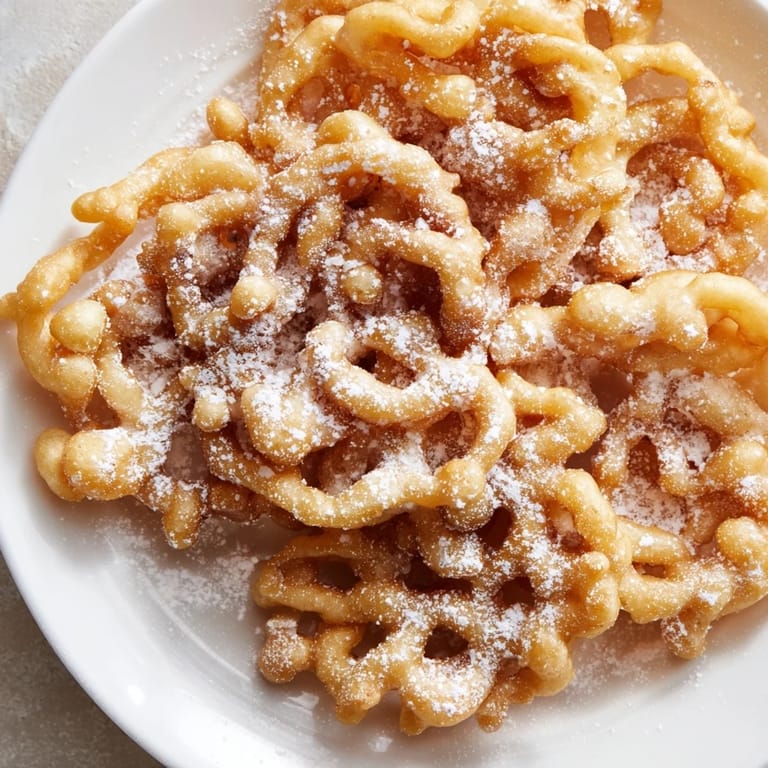
- Fill your funnel with about 1/2 cup of batter, hold your finger over the spout, position it about 3 inches above the oil, and let it flow in a swirling, overlapping pattern as if you're drawing on the surface of the oil. The motion is what creates those beautiful, lacy gaps.
- Flip and finish frying:
- After 1 to 2 minutes, when the underside is golden and set, use tongs to carefully flip and fry the other side until it matches. This takes practice—your first one might not be perfect, and that's completely normal.
- Drain and dust:
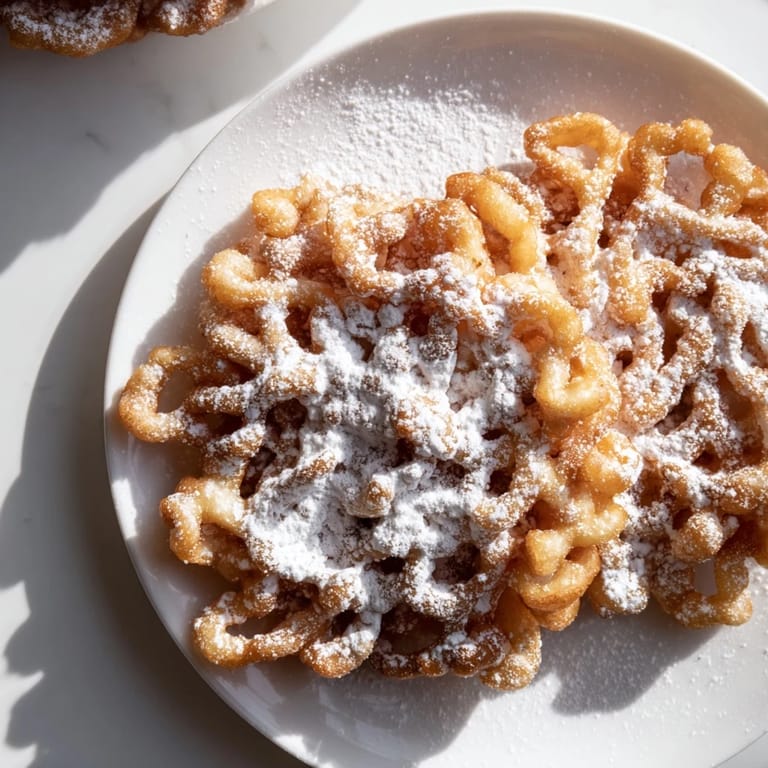
- Transfer to paper towels to drain off excess oil while they're still warm, then dust generously with powdered sugar. The warm cake helps the sugar stick and creates that iconic snowy appearance.
 Save to Pinterest
 There's something almost childlike about eating a funnel cake—the way the powdered sugar gets everywhere, how you can't help but smile when you bite through the crispy outside into that tender, warm inside. It's one of those rare desserts that brings back that wide-eyed fairground feeling, no matter where you are or how old you've gotten.
Texture and Temperature Matter
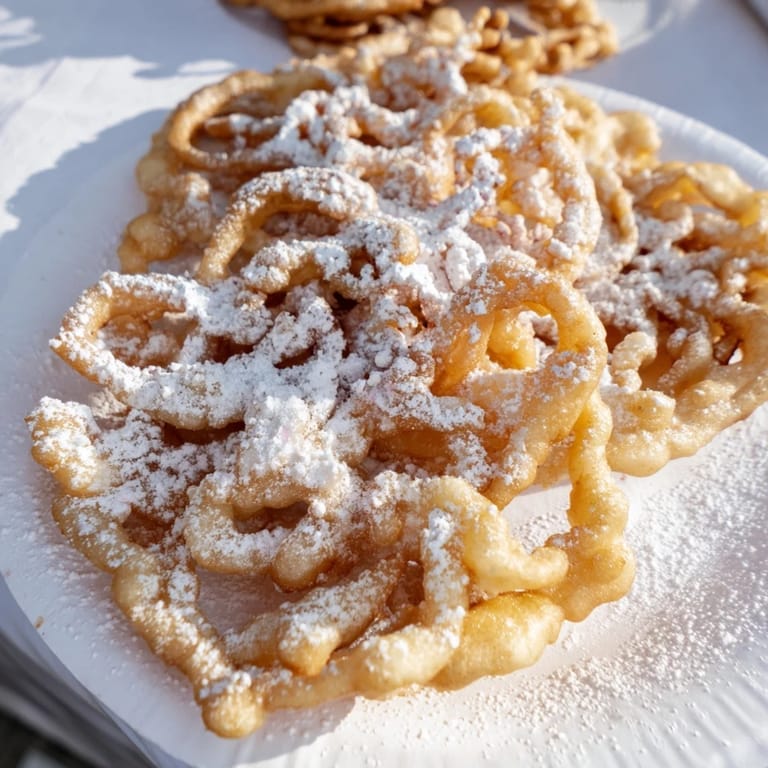
The magic of funnel cakes really does come down to serving them hot. Once they cool, they lose that contrast between the lacy, crispy exterior and the softer interior that makes them special. I learned this the hard way by trying to make a batch in advance for a gathering—they were edible but missing that delicate, almost-fragile quality. Now I time it so the last cake comes out just as people are ready to eat, and the difference is remarkable.
The Funnel Technique
At first, the funnel pouring felt impossibly tricky, like I was trying to draw in hot oil while holding my breath. But the secret is to move smoothly and deliberately, letting the batter flow in overlapping loops that create those iconic gaps and lacy patterns. You can use a traditional kitchen funnel or a squeeze bottle with a wide opening—whatever feels more comfortable in your hand makes a difference in how steady your pour becomes.
Creative Toppings and Variations
Once you've mastered the basic funnel cake, the toppings become your playground. The classic powdered sugar is irreplaceable, but I've found that a light dusting of cinnamon sugar adds warmth, while cocoa powder mixed in makes them feel slightly more sophisticated. Chocolate sauce, fresh berries, whipped cream, or even a drizzle of caramel turn them into something special without requiring any changes to the core recipe.
- Try mixing cinnamon or cocoa into the powdered sugar before dusting for a twist on the classic.
- A small bowl of chocolate sauce or berry compote on the side lets everyone customize their own cake.
- Make them fresh right before serving to preserve that magical contrast between crispy and tender.
 Save to Pinterest
 Funnel cakes remind me that some of the most delightful things in the kitchen come from simple ingredients and a little bit of playfulness. There's real joy in watching someone's face light up when they bite into one warm from the oil.
Recipe FAQs
- → What causes the lacy pattern on the cakes?
The batter is poured through a funnel in a spiraling motion over hot oil, creating thin, overlapping strands that form the signature lacy texture.
- → How can I make sure the cakes cook evenly?
Maintain the oil temperature at around 375°F (190°C) and fry each side for 1 to 2 minutes until golden brown for even cooking and crispiness.
- → Can I add flavors to the powdered sugar topping?
Yes, cinnamon or cocoa powder can be mixed into the powdered sugar to add a pleasant aroma and complementary taste.
- → What is the best way to serve these cakes?
Serve them warm with a generous dusting of powdered sugar. They pair wonderfully with fresh berries, chocolate sauce, or whipped cream.
- → Are there substitutions for dairy or gluten in this dish?
For gluten-free options, use a gluten-free flour blend, and plant-based milk can replace whole milk for dairy-free variations.