 Save to Pinterest
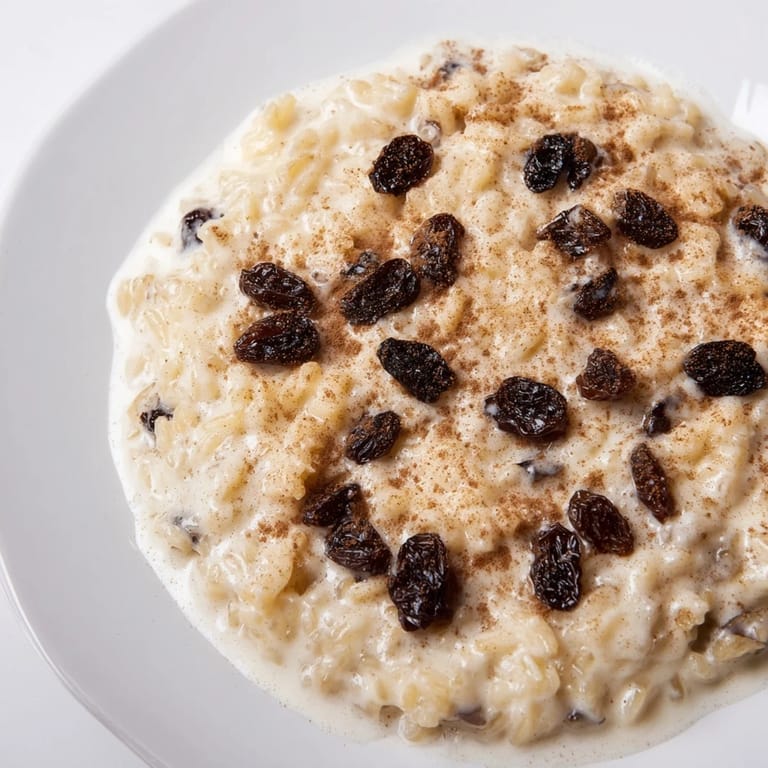
 There's something about rice pudding that stops time. My grandmother kept a ceramic dish with a chipped rim reserved only for baking it, and the smell of cinnamon-infused milk would drift through her kitchen on Sunday afternoons, signaling something warm and unhurried was about to happen. Years later, I found myself craving that exact comfort during a rainy week when everything felt chaotic, so I rebuilt it from memory and a faded recipe card. That first spoonful brought back her kitchen so clearly it almost hurt. Now I make this whenever I need to remind myself that simple things done with care matter most.
I served this to a friend who'd just moved into her first apartment, and watching her face light up as she tasted it reminded me why comfort food matters. She went back for seconds before the first spoonful had even settled, then asked if I'd teach her to make it. That afternoon, standing side-by-side in her small kitchen, I realized this pudding had become my love language.
Ingredients
- Short-grain white rice (120 g / 2/3 cup): Short-grain is non-negotiable here—it releases starch as it cooks, creating that signature silky texture long-grain varieties simply won't deliver.
- Whole milk (1 liter / 4 cups): This is the foundation; don't skimp on quality, and room-temperature milk blends into the sugar more smoothly than cold.
- Heavy cream (60 ml / 1/4 cup): Those few ounces of cream lift the pudding from pleasant to luxurious, and you'll taste the difference immediately.
- Unsalted butter (40 g / 3 tbsp): Butter carries flavor and richness that margarine cannot; it also prevents the pudding from feeling heavy or greasy.
- Granulated sugar (100 g / 1/2 cup): Start with this amount, but taste at the end and adjust if you prefer less sweetness—the rice will taste less sweet than the mixture.
- Raisins (80 g / 1/2 cup): Plump them slightly by soaking in warm water for five minutes before adding if you prefer softer, juicier raisins scattered throughout.
- Ground cinnamon (1 tsp): Freshly ground cinnamon makes an enormous difference; old cinnamon tastes like dust by comparison.
- Pure vanilla extract (1 tsp): Imitation vanilla disappears into the pudding; real vanilla adds a subtle complexity that lingers on the palate.
- Fine salt (1/4 tsp): Salt is the secret ingredient that makes everything taste more like itself and balances sweetness.
- Ground nutmeg, for garnish: A small pinch adds warmth and an almost nostalgic finish; some people remember nutmeg before they remember spice.
Tired of Takeout? 🥡
Get 10 meals you can make faster than delivery arrives. Seriously.
One email. No spam. Unsubscribe anytime.
Instructions
- Prepare your stage:
- Heat your oven to 160°C (325°F) and lightly butter a 2-liter baking dish—this gentle heat will coax the pudding to creaminess without scorching the edges. Think of this like setting the mood before cooking.
- Rinse and ready the rice:
- Run your rice under cold water, stirring gently with your fingertips, until the water runs completely clear; this removes excess starch that would make the pudding gluey rather than creamy. The difference is in how the grains will eventually feel on your tongue.
- Build the sweet milk base:
- In a large saucepan, combine milk, cream, sugar, butter, cinnamon, and salt, then warm it gently over medium heat, stirring slowly until you can see the sugar has dissolved and the surface steams softly. You want this warm and fragrant, never boiling—boiling is the enemy of creamy pudding.
- Welcome the rice and raisins:
- Stir your drained rice and raisins into the warm milk, then remove from heat and add the vanilla extract immediately so it doesn't cook away. The rice will begin absorbing liquid the moment it touches the milk, beginning its transformation.
- Transfer to the dish:
- Pour everything into your buttered baking dish and stir gently to distribute the rice and raisins evenly throughout. You want a uniform mixture with no pockets of liquid sitting at the bottom.
- The covered bake:
- Cover the dish tightly with aluminum foil and slide it into the oven for 55 minutes, stirring gently halfway through to redistribute the rice and ensure even cooking. This covered time allows the rice to absorb the milk gradually, building creaminess without browning.
- The final uncovered bake:
- Remove the foil and return the pudding to the oven for 15–20 more minutes until the top develops a light golden surface and the rice is completely tender. You're looking for a pudding that jiggles slightly when moved, not one that's rock-hard.
- The crucial rest:
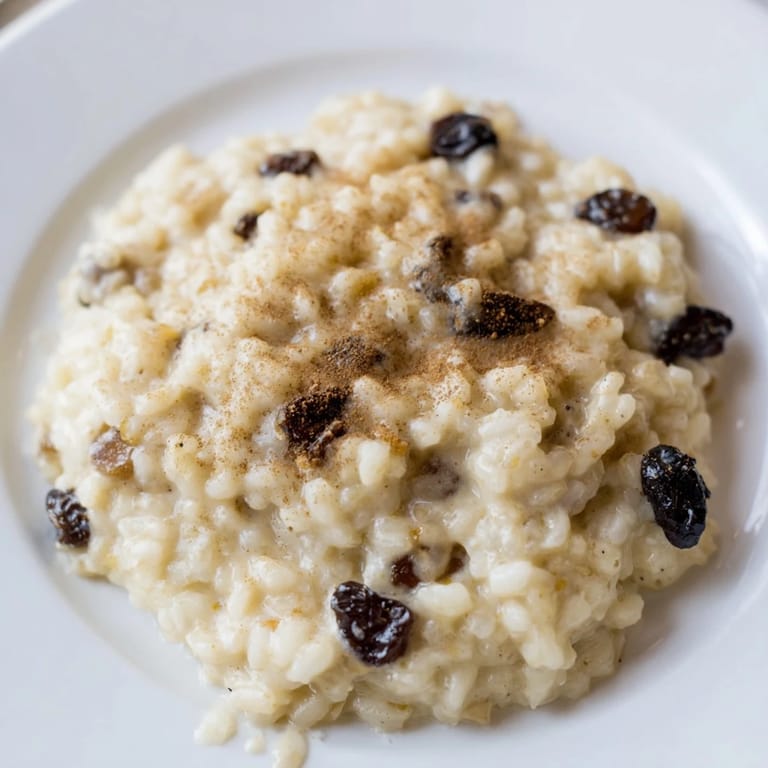
- Let it cool for 10 minutes at room temperature—the pudding will set up and become even creamier as it cools. This rest is worth honoring; it changes everything.
 Save to Pinterest
 Years ago, my partner arrived home to find the kitchen filled with the smell of cinnamon and cream, and he asked if something special was happening. I told him yes, something special was happening every day, and he deserved to know it. That bowl of warm rice pudding somehow said things I'd been struggling to articulate.
Texture Secrets
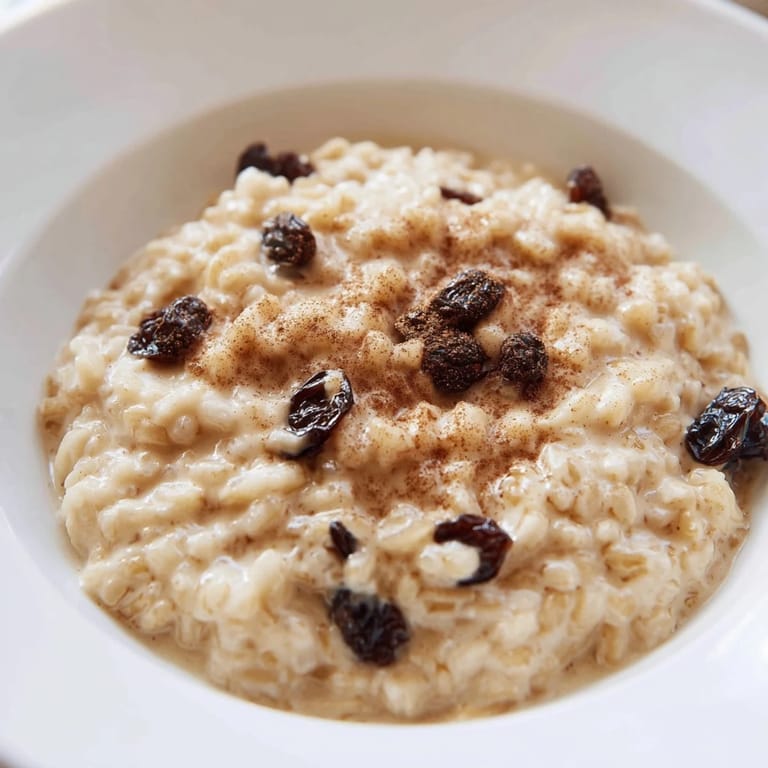
The magic of rice pudding lives in the balance between individual grains and creamy sauce. Short-grain rice releases starch into the milk as it cooks, creating that signature silky texture that feels luxurious on the palate without being heavy. Medium-grain rice comes close but doesn't quite deliver the same velvety mouthfeel. The butter and cream contribute richness, but it's the starch from the rice itself that builds the structure. Every element—the milk, the cream, the butter, the rice—works together to create something greater than the sum of its parts.
Temperature and Timing
This pudding exists in two beautiful states: warm and chilled. Serve it straight from the oven with a spoon that releases a small cloud of steam, and you'll taste the vanilla extract and cinnamon most prominently. Chill it overnight and the flavors meld into something subtly different—less bright, more complex and understated. I've found that the raisins plump more noticeably when the pudding is chilled, and the cinnamon settles into the background, letting the vanilla and rice shine. Neither version is better than the other; they're simply different moods of the same dessert.
Personal Variations and Riffs
Once you've mastered the base, this pudding becomes a playground for your own memories and preferences. Golden raisins taste brighter and less heavy than regular raisins, while dried cranberries or chopped dried apricots bring tartness that cuts through the richness beautifully. I once experimented with replacing half the milk with coconut milk on a whim, and the pudding developed a subtle tropical undertone that surprised everyone who tried it. Some people add a whisper of cardamom or nutmeg to the cooking liquid, while others infuse theirs with a splash of rum or brandy for elegance. The foundation is strong enough to support your creativity without falling apart.
- Try stirring in a tablespoon of honey at the very end for deeper sweetness without crystals.
- A handful of toasted nuts stirred in just before serving adds welcome textural contrast to the creaminess.
- For a less sweet pudding, reduce the sugar to 75 g and taste as you go—you can always add more, but you cannot remove sweetness once it's baked.
 Save to Pinterest
 Rice pudding teaches patience and presence in a way few desserts do. It rewards you not for speed or precision, but for attention and care.
Recipe FAQs
- → What type of rice is best for creamy baked rice pudding?
Short-grain white rice is preferred due to its higher starch content, which helps produce a creamy texture.
- → Can I substitute raisins with other dried fruits?
Yes, golden raisins or dried cranberries work well and add a flavorful twist to the dish.
- → How do I achieve a thick and creamy consistency?
Slow baking with a covered dish followed by uncovered baking helps the rice absorb the milk gradually, creating a thick texture.
- → Is it possible to make this dish dairy-free?
Replacing half or all of the milk with coconut milk adds richness while keeping it dairy-free and delicious.
- → How should the pudding be served for best flavor?
Serve warm or chilled, optionally garnished with a sprinkle of ground nutmeg to enhance its aromatic profile.