 Save to Pinterest
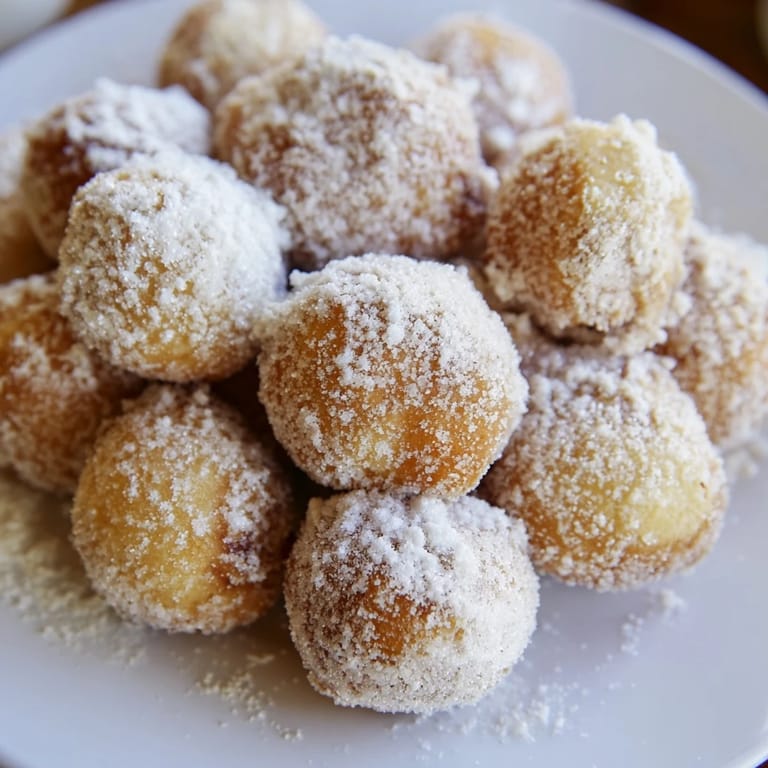
 My neighbor knocked on the door one Saturday morning with a box of doughnut holes still warm from her kitchen, and I was hooked instantly. There's something about that first bite—the way the outside cracks under your teeth while the inside stays impossibly soft—that makes you want to make them yourself. I spent weeks perfecting the ratio of nutmeg to everything else, discovering that the secret isn't complexity but precision. Now I make a batch whenever I need something that feels both indulgent and achievable, something that turns a regular afternoon into a small celebration.
I made these for my daughter's soccer team one chilly October morning, and watching kids' faces light up as they realized these weren't store-bought felt like winning the lottery. One kid asked if I'd made them with love, which broke my heart in the best way. That batch taught me that homemade doughnut holes have a texture store versions will never match, and that's worth the small effort every single time.
Ingredients
- All-purpose flour: The foundation—use fresh flour if you can, as old flour loses its lift and makes dense holes.
- Granulated sugar: Adds subtle sweetness to the dough itself, not just the coating.
- Baking powder: Your leavening agent—measure carefully here because too much makes them taste soapy, too little leaves them gummy.
- Salt: A small pinch that makes everything taste more like itself.
- Ground nutmeg: The quiet backbone of the flavor profile—this is what people taste without realizing it.
- Whole milk: Creates richness and tenderness that skim milk simply won't deliver.
- Eggs: Binding and structure, plus they add a whisper of richness.
- Unsalted butter, melted: Flavor and texture—melted means it disperses evenly throughout the batter.
- Vanilla extract: A teaspoon rounds out the flavor without making the doughnuts taste sweet in a one-note way.
- Vegetable oil for frying: Choose an oil with a high smoke point; refined oils work best.
- Powdered sugar and cinnamon: The traditional coatings—pick whichever calls to you, or do half and half.
Tired of Takeout? 🥡
Get 10 meals you can make faster than delivery arrives. Seriously.
One email. No spam. Unsubscribe anytime.
Instructions
- Gather and mix your dry ingredients:
- In a large bowl, whisk together flour, granulated sugar, baking powder, salt, and nutmeg until everything feels evenly distributed. This is where you're building the framework for tender doughnuts.
- Combine the wet mixture:
- In another bowl, whisk milk, eggs, melted butter, and vanilla until smooth and pale. Smell it—that vanilla should be noticeable but not overpowering.
- Bring dough together gently:
- Pour the wet ingredients into the dry and stir just until combined, leaving a few flour streaks visible. Overmixing develops gluten and makes the doughnuts tough instead of tender.
- Heat oil to the right temperature:
- Use a thermometer and bring vegetable oil to 350°F in a deep pot—this temperature is crucial. Too cool and you get greasy holes; too hot and they brown outside before cooking through.
- Fry in patient batches:
- Using a cookie scoop or spoon, drop tablespoon-sized balls into the oil, working in small batches so the temperature doesn't plummet. Watch them sizzle and float, turning occasionally for even browning.
- Cook until golden and through:
- Fry for 2–3 minutes total, until they're deep golden brown and a fork easily pierces the center. The sound they make when they're done is different—crisper somehow.
- Drain and rest briefly:
- Lift them out with a slotted spoon and let them sit on paper towels for a minute, still warm and slightly crisp.
- Coat while warm:
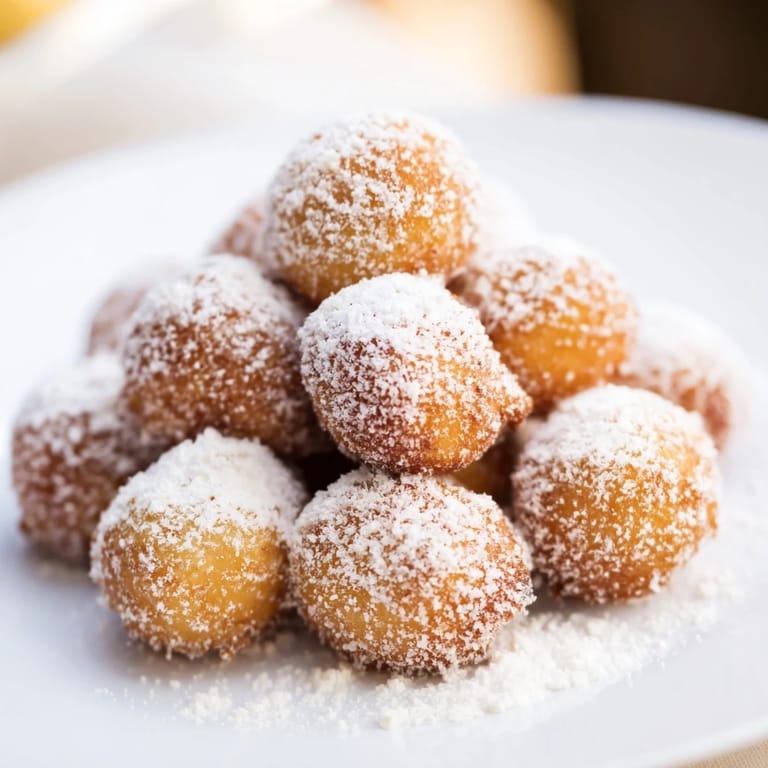
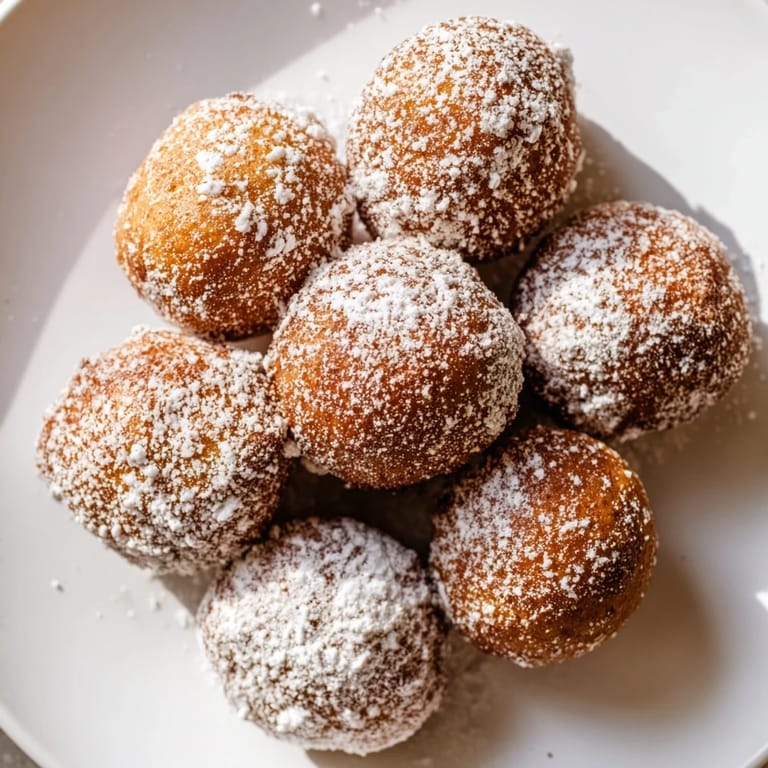
- Roll the still-warm doughnuts in powdered sugar, cinnamon sugar, or whatever coating you've chosen. The warmth helps it stick and creates little pockets of sweetness.
 Save to Pinterest
 The smell of warm doughnuts frying in oil is its own kind of language, one that brings people into the kitchen without being asked. My partner will emerge from anywhere in the house within seconds of that smell hitting the air, and we'll both end up covered in powdered sugar by the time we're done. That's when these stop being a recipe and start being a ritual.
Coating Variations Worth Trying
While the powdered sugar and cinnamon-sugar classics are reliable, the coating is where you can have genuine fun without changing what makes the doughnuts special. Maple sugar adds earthiness, vanilla sugar brings sweetness without the grease, and a mixture of cinnamon and cardamom (a pinch of each) creates something that feels both sophisticated and comforting. I've also mixed cocoa powder into powdered sugar for chocolate-dusted holes, and they disappeared just as fast as the traditional versions.
Storage and Shelf Life
These are genuinely best eaten within a few hours of frying, when the outside still has that delicate crispness and the inside hasn't started to firm up. That said, they keep reasonably well in an airtight container for up to a day, though reheating in a low oven (around 300°F for 5 minutes) helps restore some of that fresh texture. I've learned the hard way that refrigerating them makes them stale faster than room temperature storage, so trust a sealed container on the counter instead.
Flavor Boosters and Filled Variations
The cardamom note mentioned in the original notes is genuinely worth exploring—just a pinch added to the dry ingredients gives the doughnuts a subtle warmth that makes people pause and wonder what they're tasting. Beyond coatings, you can also inject a small amount of jam, custard, or chocolate into the center after frying if you want to turn a simple doughnut hole into something with a pleasant surprise. One discovery I've made recently is that a tiny brushing of honey right after they come out of the oil adds shine and subtle floral notes without making them cloyingly sweet.
- Cardamom adds unexpected sophistication without announcing itself loudly.
- A small injection of jam transforms the simple hole into a filled treat.
- Brush with honey while warm for shine and delicate sweetness.
 Save to Pinterest
 These doughnut holes have taught me that sometimes the most satisfying treats are the simplest ones, the ones that require attention more than fancy ingredients. They're proof that a little warmth, a little sugar, and a little care can create a moment worth remembering.
Recipe FAQs
- → What type of flour is best for these dough balls?
All-purpose flour provides the ideal balance of structure and tenderness for these fried bites.
- → How do I achieve a crispy exterior and soft interior?
Frying at 350°F (175°C) ensures the dough balls cook evenly, producing a golden crust with a tender center.
- → Can I add flavor variations to the dough?
Yes, spices like nutmeg are included, and for added aroma, a pinch of cardamom can be incorporated into the dough.
- → What are good coating options?
Powdered sugar or a mix of granulated sugar and cinnamon provide classic sweet finishes that complement the fried dough.
- → How should leftover pieces be stored?
Store them in an airtight container and consume within one day to maintain texture and flavor.
- → Can these be filled after frying?
Yes, fillings like jam or chocolate can be added post-frying for an enjoyable twist.