 Save to Pinterest
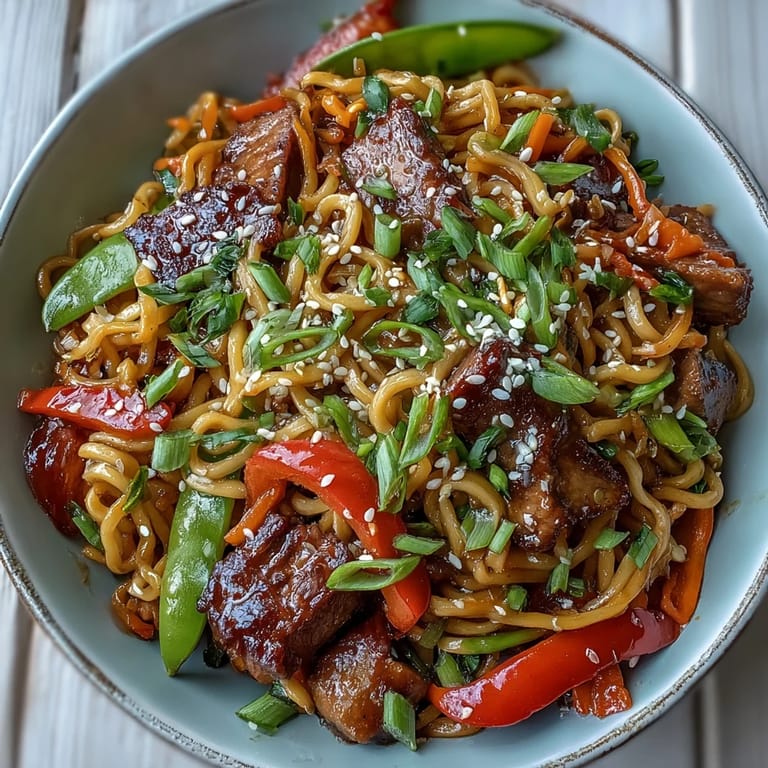
 The sizzle of pork hitting a smoking hot wok is one of those sounds that makes everyone in the house wander into the kitchen. I started making this stir-fry on nights when I needed something fast but still wanted that deep, savory satisfaction of takeout. The first few times, I made the mistake of overcrowding the pan and ending up with steamed pork instead of those beautiful caramelized edges. Now I know better, and this dish comes together in less time than it takes to scroll through a delivery app.
I remember making this for a friend who swore she didnt like pork. She had three helpings and texted me the next day asking for the recipe. There is something about the way the ginger and garlic perfume the kitchen, the way the noodles soak up that glossy sauce, that turns skeptics into believers. It became my go to whenever someone needed comfort in a bowl, fast.
Ingredients
- Pork loin or tenderloin: Slice it thin against the grain so it stays tender and cooks quickly, the marinade helps it brown beautifully without drying out.
- Soy sauce and cornstarch marinade: This quick combo tenderizes the meat and creates a light coating that helps it sear instead of steam.
- Egg noodles or rice noodles: Egg noodles give you chew and body, rice noodles make it lighter, either way cook them just until tender and rinse them so they dont clump.
- Red bell pepper, carrot, and sugar snap peas: These three bring color, crunch, and sweetness, julienne them thin so they cook evenly and quickly.
- Spring onions, garlic, and ginger: The holy trinity of stir-fry aromatics, they build layers of flavor that make everything else taste better.
- Stir-fry sauce: Soy sauce, oyster sauce, hoisin, sesame oil, brown sugar, and a splash of water create a glossy, savory-sweet coating that clings to every strand of noodle.
- Vegetable oil: High smoke point oil is key for stir-frying, it lets you get that wok heat without burning.
- Sesame seeds and coriander: A sprinkle of seeds adds nutty crunch, fresh coriander brings brightness and a little pop of green.
Tired of Takeout? 🥡
Get 10 meals you can make faster than delivery arrives. Seriously.
One email. No spam. Unsubscribe anytime.
Instructions
- Marinate the pork:
- Toss the thinly sliced pork with soy sauce and cornstarch in a bowl, then let it sit for 10 minutes while you prep everything else. This short rest makes the pork juicy and helps it develop a golden crust.
- Cook the noodles:
- Boil the noodles according to package directions, then drain and rinse them under cold water to stop the cooking. This keeps them from turning mushy when you toss them in the wok.
- Mix the sauce:
- Whisk together soy sauce, oyster sauce, hoisin, sesame oil, brown sugar, and water in a small bowl. Having it ready means you can pour and toss without scrambling mid-stir-fry.
- Sear the pork:
- Heat a tablespoon of oil in a large wok or skillet over high heat until it shimmers, then add the pork in a single layer and let it sear for 2 to 3 minutes until browned. Remove it and set it aside so it doesnt overcook.
- Stir-fry the vegetables:
- Add the remaining oil, then toss in garlic, ginger, bell pepper, carrot, and sugar snap peas, stirring constantly for 3 to 4 minutes until they are just tender but still crisp. The high heat should make everything sizzle and blister slightly.
- Bring it all together:
- Return the pork to the wok, add the cooked noodles and the prepared sauce, then toss everything together for 2 to 3 minutes until the noodles are glossy and heated through. The sauce should coat every strand and piece.
- Finish and serve:
- Toss in the spring onions, give everything one last stir, then remove from heat. Serve immediately with sesame seeds and fresh coriander or sliced chili on top.
 Save to Pinterest
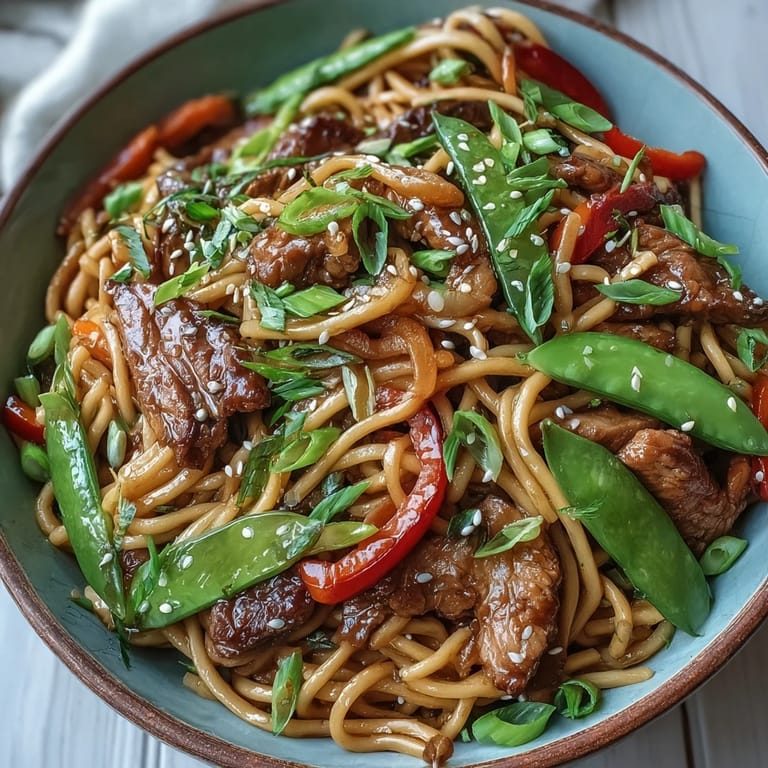
 There was a rainy Tuesday when I made this with whatever vegetables I had wilting in the crisper drawer. It turned out even better than the original version, and I realized this recipe is less about following rules and more about trusting the process. Now it is the dish I make when I want to feel like I have my life together, even if I absolutely do not.
Swapping Proteins and Vegetables
This stir-fry is endlessly adaptable, and I have made it with chicken thighs, firm tofu, and shrimp with equal success. If you use tofu, press it well and cut it into cubes so it crisps up nicely. Mushrooms, baby corn, bok choy, or even broccoli florets work beautifully in place of or alongside the vegetables listed. Just keep the cooking times in mind and add heartier vegetables first, delicate greens last.
Making It Gluten-Free
Switching to tamari instead of soy sauce and using rice noodles makes this dish gluten-free without losing any flavor. Check your oyster sauce label or use a gluten-free oyster-flavored sauce, some brands sneak wheat in. I have served this to friends with celiac disease and they had no idea it was modified, the sauce still clings and the noodles still satisfy.
Serving and Storing
This is best eaten straight from the wok when the noodles are glossy and the vegetables still have snap. Leftovers keep in the fridge for up to two days, but the noodles will absorb more sauce and soften. Reheat gently in a skillet with a splash of water or soy sauce to loosen everything up.
- Garnish with sesame seeds, fresh coriander, or thinly sliced red chili for heat and color.
- Pair it with a crisp Riesling or a light lager to balance the savory richness.
- Double the sauce if you like your noodles extra saucy, it keeps in the fridge for a week.
 Save to Pinterest
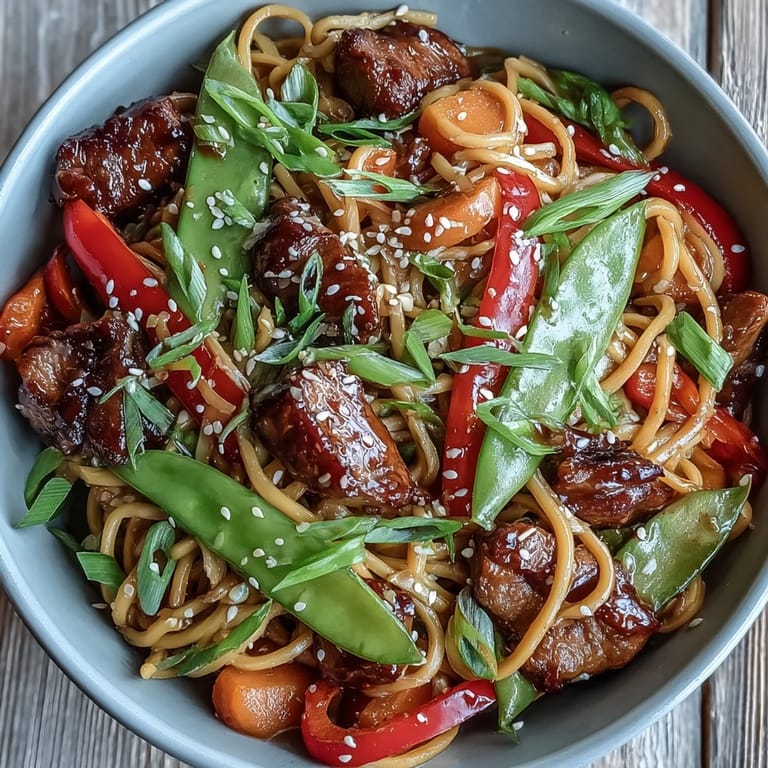
 This stir-fry has earned its place in my weeknight rotation because it delivers restaurant flavor without the wait or the cleanup. I hope it becomes one of those recipes you make without thinking, the kind that feels like muscle memory and tastes like home.
Recipe FAQs
- → Can I use a different protein instead of pork?
Yes, you can easily substitute chicken breast, firm tofu, shrimp, or beef. Adjust cooking times accordingly—shrimp cooks faster while beef may need slightly longer.
- → What type of noodles work best for this stir-fry?
Egg noodles or rice noodles work perfectly. You can also use udon, soba, or even spaghetti in a pinch. Just cook according to package directions and drain well before adding to the wok.
- → How do I prevent the noodles from sticking together?
After draining cooked noodles, toss them with a small amount of oil to prevent clumping. When stir-frying, ensure your wok is hot and keep ingredients moving constantly for even coating.
- → Can I make this dish gluten-free?
Absolutely. Use tamari instead of soy sauce, gluten-free rice noodles, and check your oyster sauce label or use a gluten-free alternative. This maintains the flavor while accommodating dietary needs.
- → What vegetables can I add or substitute?
Feel free to add bok choy, mushrooms, baby corn, broccoli, or snow peas. Use whatever fresh vegetables you have on hand, keeping in mind harder vegetables may need a bit more cooking time.
- → How should I store and reheat leftovers?
Store in an airtight container in the refrigerator for up to 3 days. Reheat in a hot wok or skillet with a splash of water to refresh the noodles, or microwave until heated through.