 Save to Pinterest
 There's something about the simplicity of this bowl that caught me off guard one quiet Tuesday evening when I was searching for something nourishing but not heavy. I'd been curious about shirataki noodles for months, skeptical even, until a friend mentioned how they'd transformed her weeknight routine. That first time I combined them with a homemade bone broth I'd been simmering since morning, the kitchen filled with this subtle, warm aroma of ginger and garlic that made everything feel intentional. It became my go-to when I needed comfort without the guilt, and honestly, it still is.
I made this for my sister when she was going through a strict low-carb phase, and I watched her face light up when she realized she could have a real bowl of noodles again. She'd been missing that textural satisfaction of slurping something warm, and this gave it back to her. Now she texts me for the recipe at least once a month, usually when life gets overwhelming and she needs something that feels both comforting and grounded.
Ingredients
- Bone broth (4 cups): This is genuinely the foundation, so don't skimp here—look for varieties with actual bones listed and no added sugars, because those bits of collagen make all the difference in mouthfeel.
- Fresh ginger (thumb-sized piece, sliced): Slicing rather than mincing it lets you fish it out easily later, and the warmth it brings is subtle but unmistakable once it infuses into the broth.
- Garlic (2 cloves, smashed): Smashing releases the oils without overwhelming the broth, which is the point—you want presence, not punch.
- Soy sauce or tamari (2 tablespoons): Tamari is your friend if gluten is a concern, and the depth it adds is absolutely worth the small extra cost.
- Rice vinegar (1 tablespoon): This tiny bit of acid brightens everything and keeps the broth from tasting flat, which I learned after one underwhelming bowl without it.
- Sesame oil (1 teaspoon): A little goes a long way—this creates a subtle nuttiness that makes people ask what the secret ingredient is.
- Shirataki noodles (400 g): Rinse these thoroughly under cold water and then pour boiling water over them to eliminate the fishy smell that catches people off guard; trust me on this step.
- Soft-boiled eggs (2, halved): The runny yolk becomes its own sauce, adding richness and keeping everything from feeling too austere.
- Spring onion, red chili, fresh herbs, sesame seeds: These toppings aren't optional in spirit—they transform the bowl from simple to something you actually get excited about eating.
Tired of Takeout? 🥡
Get 10 meals you can make faster than delivery arrives. Seriously.
One email. No spam. Unsubscribe anytime.
Instructions
- Build your flavor base:
- Combine bone broth, ginger slices, smashed garlic, soy sauce, rice vinegar, and sesame oil in a medium pot and bring to a gentle boil over medium heat. The bubbles should be lazy, not aggressive.
- Let it whisper for ten minutes:
- Reduce heat to a simmer and let those aromatics become one with the broth—you'll notice the smell change as it mellows and deepens, which is exactly what you're waiting for.
- Rescue your noodles from their smell:
- While the broth infuses, drain the shirataki noodles and rinse them thoroughly under cold water until the liquid runs clear. Place them in a sieve and pour boiling water over them to neutralize any funky odor they came with.
- Introduce noodles to broth:
- Add the prepared noodles to your simmering broth and let them warm through for 2–3 minutes—they're already cooked, so you're just bringing them into the warmth.
- Remove the spent soldiers:
- Fish out the ginger slices and garlic cloves with a spoon or small strainer; they've done their job and now it's time to let them rest.
- Build your bowls:
- Divide noodles and broth evenly between two bowls, using a ladle so everyone gets equal broth-to-noodle ratio.
- Crown your creation:
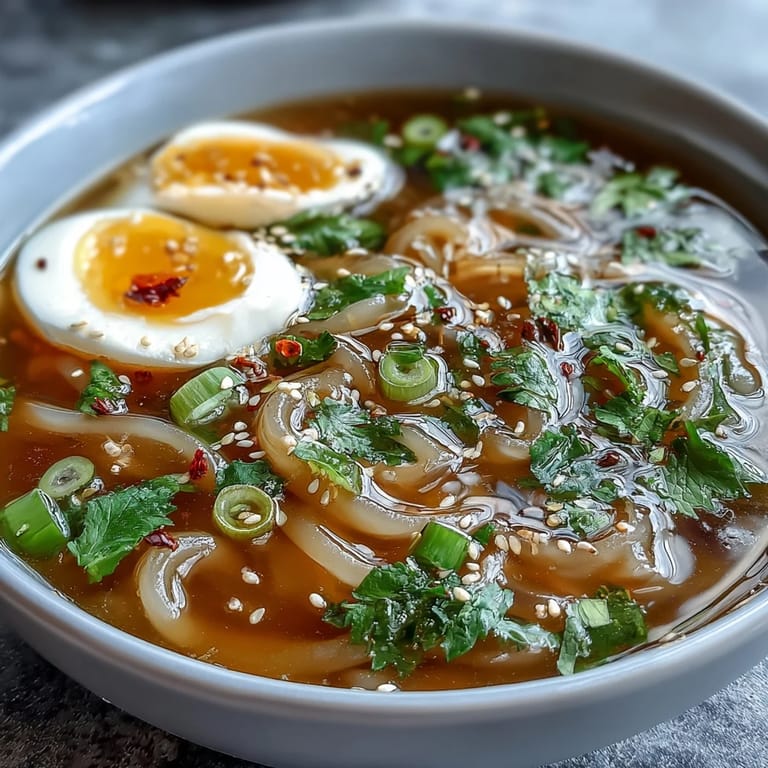
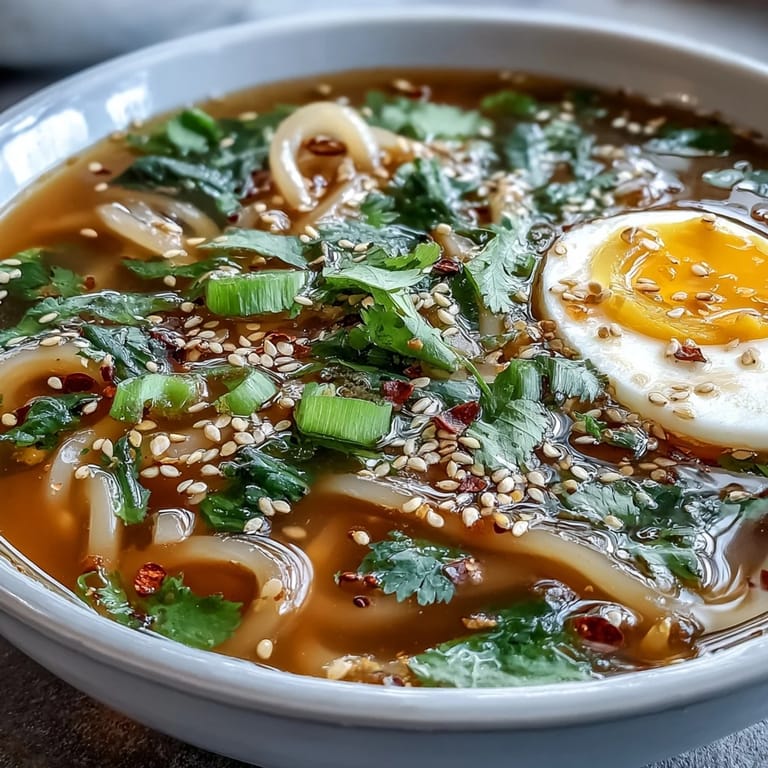
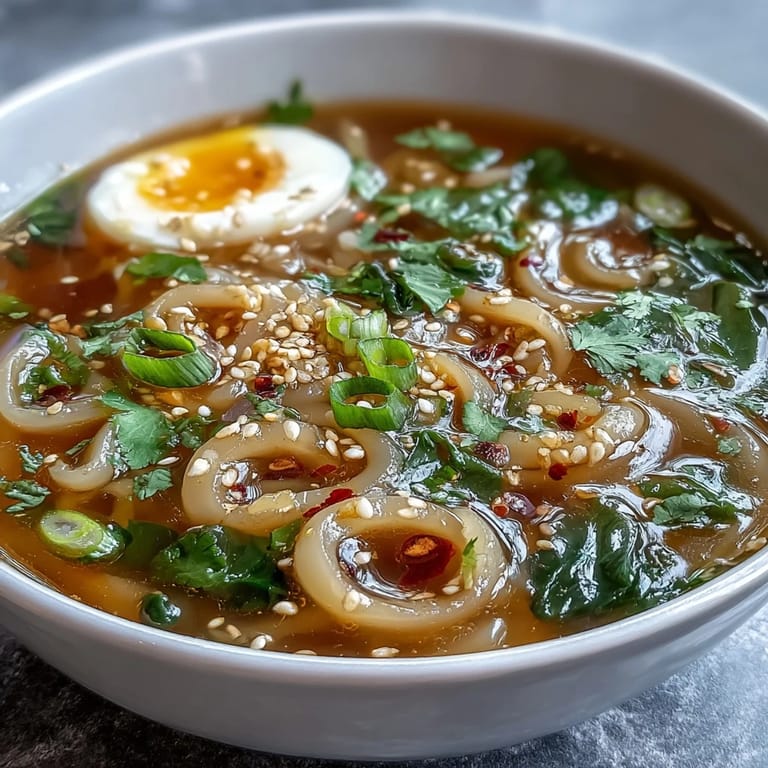
- Top each bowl with a soft-boiled egg half, sliced spring onion, thin red chili slices, fresh herbs, and a small scatter of toasted sesame seeds—this is where the bowl becomes a moment worth savoring.
 Save to Pinterest
 There was a cold Sunday morning when I made this for myself without thinking, just moved through the steps with my hands on autopilot, and halfway through the first slurp I realized I'd stopped worrying about carbs or points or any of that noise. I was just eating something warm that tasted genuinely good, and that simplicity felt like a small victory in a life that usually demands explanation for everything. That's when I knew this recipe wasn't just about the noodles anymore.
The Shirataki Noodle Question
Most people come to shirataki noodles with skepticism, which is fair because the texture takes getting used to—they're chewier than wheat noodles and slightly more delicate. But in a broth like this, where they're cushioned in warmth and flavor, that slightly bouncy texture becomes an asset rather than a drawback. I've learned that shirataki noodles don't want to stand alone in a bowl with nothing but soy sauce; they want a community around them, and this broth provides exactly that.
Broth Matters More Than You Think
The entire dish hinges on using broth that actually tastes like something, not the thin, salty stuff hiding behind marketing language. Homemade bone broth is ideal if you have it, but high-quality store-bought versions work just fine—just read the ingredient list and make sure you're actually getting bones and not just coloring and salt. A truly good broth should feel silky on your tongue and taste rich without being heavy, almost like it's been loved into existence.
Making This Your Own
The beauty of this bowl is that it accepts modification the way comfort food should—it doesn't argue back when you change things. Some nights I add shredded rotisserie chicken because my body is asking for more protein, other times I swap the eggs for crispy tofu if I'm feeding someone who avoids animal products. The core remains intact while everything around it shifts to fit your needs or your mood on any given evening.
- Add shredded cooked chicken, tofu cubes, or even finely sliced mushrooms for extra substance without changing the character of the dish.
- If you're soy-sensitive, coconut aminos swap in seamlessly and bring their own subtle sweetness that some people actually prefer.
- Keep extra toppings on the side so people can build their own bowl exactly as they like it, which somehow makes them enjoy it more.
 Save to Pinterest
 This bowl asks so little of you and gives back so much—ten minutes of attention and fifteen minutes of simmering, and suddenly you're eating something nourishing that doesn't feel like a compromise. Make it once and you'll find yourself reaching for it again, not because you have to, but because you actually want to.
Recipe FAQs
- → What do shirataki noodles taste like?
Shirataki noodles have a very mild, neutral flavor that readily absorbs the taste of whatever broth or sauce they're cooked in. Their texture is springy and slightly gelatinous, similar to glass noodles. The key is rinsing them thoroughly and boiling briefly to remove any natural aroma before adding them to your flavorful broth.
- → Are shirataki noodles really zero-carb?
Yes, shirataki noodles are virtually zero-carb because they're made from konjac yam, which contains glucomannan fiber. This fiber passes through the body undigested, making these noodles an excellent choice for keto, low-carb, and calorie-conscious eating patterns while still providing a satisfying noodle experience.
- → Can I make this vegetarian or vegan?
Absolutely. Simply substitute the bone broth with a high-quality vegetable broth and omit the egg topping. For added protein, include cubed tofu or tempeh. The aromatic base of ginger, garlic, and sesame oil creates the same depth of flavor regardless of your broth choice.
- → How do I prevent shirataki noodles from smelling?
The natural aroma of shirataki noodles is easily removed by draining and rinsing them thoroughly under cold water, then pouring boiling water over them in a sieve. This quick step eliminates any smell and prepares the noodles to perfectly absorb your broth's flavors.
- → Can I add protein to this dish?
Certainly. Shredded cooked chicken, pork, or beef work beautifully stirred into the broth. For plant-based options, add cubed tofu, tempeh, or edamame. You can also top with soft-boiled eggs, which add richness and complement the savory Asian flavors perfectly.
- → How long does this keep in the refrigerator?
The broth can be stored separately for up to 5 days and actually develops deeper flavor over time. However, shirataki noodles are best enjoyed immediately as they can become soft and mushy when refrigerated. For meal prep, store the broth and toppings separately, then cook fresh noodles when ready to eat.