 Save to Pinterest
 There's something almost meditative about standing at the stove with a hot griddle and a small scoop, dropping perfectly portioned circles of batter that puff up like tiny clouds. My sister brought a griddle to my apartment one Sunday morning with a thermos of fresh-squeezed orange juice, and we spent two hours stacking these silver dollar pancakes higher and higher, racing to see whose stack wouldn't topple. That morning turned into a tradition, and now whenever I make them, I can almost hear her laugh when I inevitably overbalance the seventh one.
I learned the magic of these pancakes at a crowded brunch place in Brooklyn where they served them in towering stacks with whipped cream melting down the sides. The server told me the secret was not overthinking the batter, and I realized I'd been making regular pancakes all wrong by beating the life out of them. Coming home that day, I recreated them in my tiny kitchen and felt like I'd cracked some code that morning chefs had been keeping from me.
Ingredients
- All-purpose flour: The foundation, and using 125 grams by weight is more reliable than scooping, which can pack the flour and make them dense.
- Granulated sugar: Just enough to add a subtle sweetness and help with browning; resist the urge to add more or the pancakes turn caramelized and tough.
- Baking powder and baking soda: This one-two punch creates lift and tenderness, but measure carefully because too much leaves a metallic aftertaste.
- Salt: A quarter teaspoon sounds small, but it brightens everything and keeps the pancakes from tasting flat.
- Whole milk: Creates richness that plant-based milk can replicate, but the flavor won't be quite identical.
- One large egg: Binds everything while adding structure and richness to each tiny pancake.
- Melted butter: Two tablespoons gives tenderness and a subtle toasted flavor that oil can't quite match.
- Vanilla extract: A whisper of vanilla that makes people say they taste something special without knowing what it is.
Tired of Takeout? 🥡
Get 10 meals you can make faster than delivery arrives. Seriously.
One email. No spam. Unsubscribe anytime.
Instructions
- Mix the dry ingredients:
- Whisk together the flour, sugar, baking powder, baking soda, and salt in a medium bowl until the lumps disappear and everything is evenly distributed. This prevents pockets of baking powder that taste bitter.
- Combine the wet ingredients:
- In a separate bowl, whisk the milk, egg, melted butter, and vanilla until the mixture is smooth and the egg is fully incorporated. You'll know it's ready when there are no streaks of egg yolk.
- Bring them together gently:
- Pour the wet ingredients into the dry bowl and stir until just barely combined. Some small lumps are your friend here because overmixing develops gluten and makes the pancakes tough instead of tender. Stop stirring while you still see a few specks of flour.
- Heat the griddle:
- Set your nonstick skillet or griddle over medium-low heat and let it warm for a minute or two. A drop of water should sizzle gently, not violently, which means you're not cooking them too fast.
- Grease and scoop:
- Lightly butter the hot surface, then use a tablespoon or small cookie scoop to drop batter into circles about the size of a quarter. Leave a little space between each one so steam can escape.
- Watch for bubbles:
- After about 1 to 2 minutes, tiny bubbles will form on the surface and the edges will look set and dry. This is your signal to flip, not a moment earlier.
- Flip and finish:
- Flip each pancake with a quick confident motion, then cook for another minute or two until the underside is golden brown and a toothpick inserted into the thickest one comes out clean.
- Keep them warm:
- Transfer finished pancakes to a plate and cover loosely with foil while you work through the remaining batter, adding a small amount of butter to the griddle between batches.
 Save to Pinterest
 The first time my nephew saw a stack of twelve of these pancakes, his eyes got so wide I thought they might actually pop out of his head. He spent twenty minutes arranging them into a precarious tower while I held my breath, and when it finally toppled, he laughed so hard that syrup went everywhere. That moment taught me that food isn't just about feeding people, it's about giving them something to play with and remember.
The Stacking Strategy
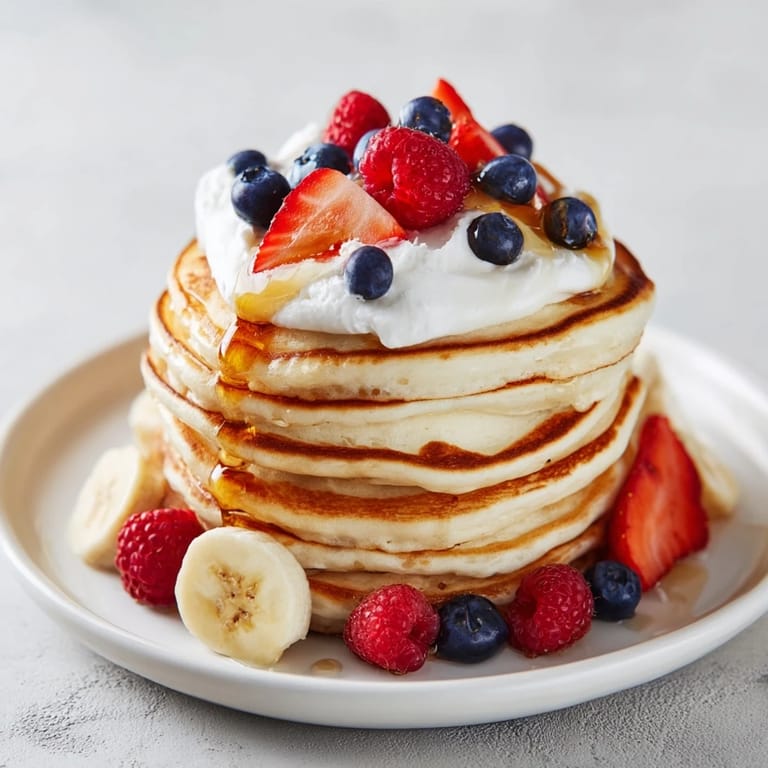
There's an art to building a tower that doesn't collapse, and it has nothing to do with the pancakes themselves. The key is using just enough syrup between layers so they stick but not so much that they slide, and placing each new pancake slightly offset from the one below it, like bricks in a wall. I learned this by trial and error, and now I time my stacking to happen just after they come off the griddle when they're still warm enough to stay soft but firm enough to support weight.
Topping Combinations That Work
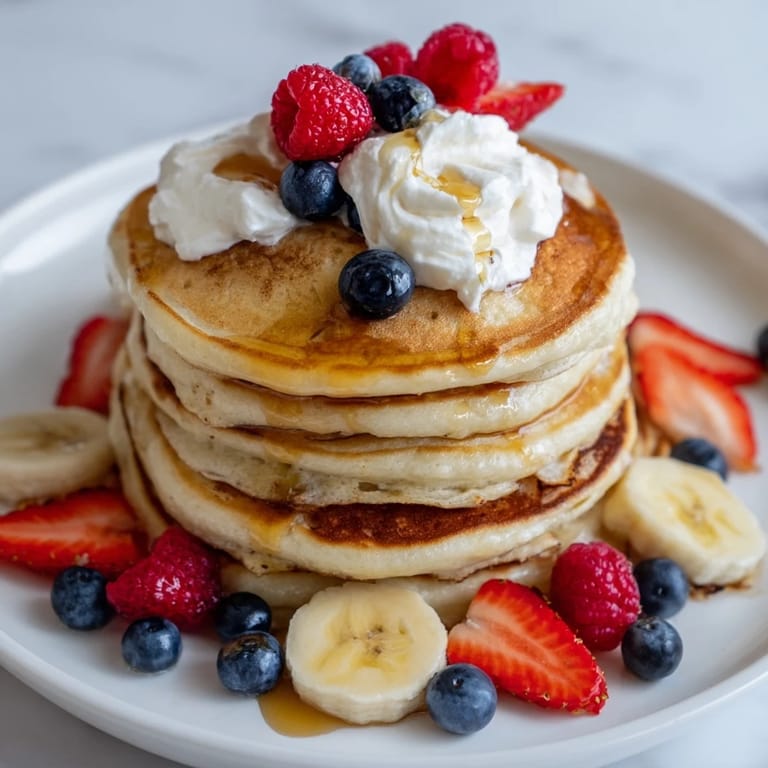
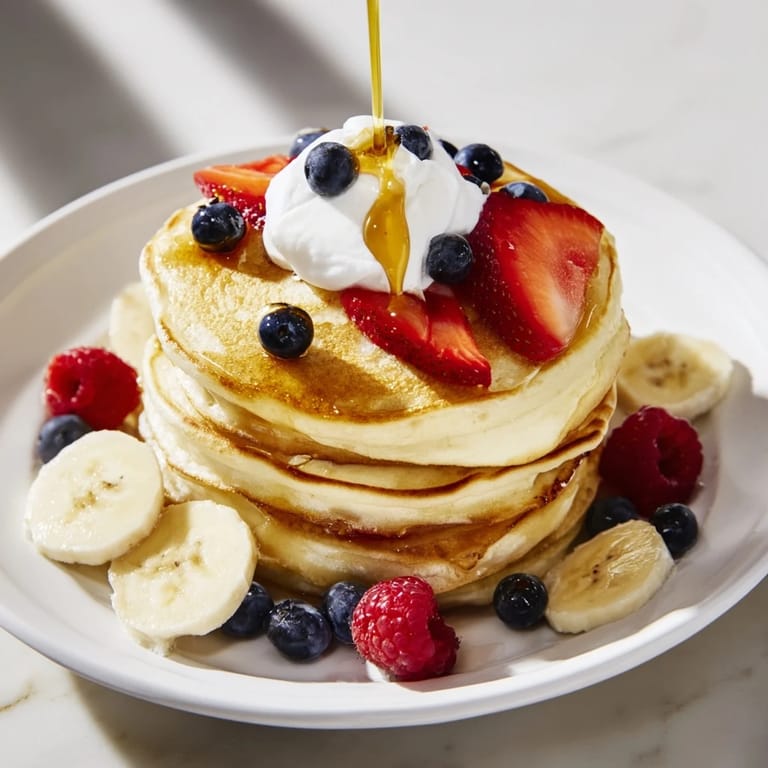
The beauty of silver dollars is how they catch whatever you put on top, so your toppings have the most real estate to shine. Fresh blueberries release their juice and stain the syrup purple, strawberries add a bright tartness against the sweetness, and whipped cream melts into the warm pancakes in a way that feels almost luxurious for breakfast food. My personal favorite is a combination of sliced bananas, a drizzle of maple syrup, and a tiny dollop of whipped cream, which feels like eating a dessert that's technically socially acceptable at 8 AM.
When Things Don't Go as Planned
Sometimes the batter breaks or the griddle temperature feels off, and instead of stressing, I've learned to treat it as information rather than failure. If the pancakes spread too thin, the batter needed a few more minutes of rest or I got too aggressive with the mixing. If they don't flip cleanly, the griddle wasn't quite hot enough or I didn't wait long enough for the bubbles to form fully. Once you understand the why, you're not just following a recipe, you're actually cooking.
- If batter seems too thick, thin it with an extra tablespoon of milk, but do it gently so you don't deflate the mixture.
- If the first pancakes stick despite the butter, wipe out the griddle with a paper towel and apply a fresh layer of fat.
- Save any leftover batter for tomorrow morning in the refrigerator; it actually makes the pancakes fluffier because the resting time continues overnight.
 Save to Pinterest
 Silver dollar pancakes turn breakfast into something you actually want to sit down for, not just wolf down before rushing out the door. They're simple enough for a solo Sunday morning and festive enough for a crowd, which makes them one of those rare recipes that works for almost any occasion.
Recipe FAQs
- → What makes silver dollar pancakes different?
They are smaller and fluffier than regular pancakes, ideal for stacking and bite-sized servings.
- → How do I achieve fluffy pancakes?
Gently mix wet and dry ingredients to avoid overworking the batter, and let it rest for a few minutes before cooking.
- → Can I substitute the milk?
Yes, buttermilk adds tanginess, while plant-based milk can be used for a dairy-free option.
- → What toppings complement silver dollar pancakes?
Maple syrup, fresh berries, sliced bananas, and whipped cream enhance their flavor and presentation.
- → How long does cooking take per batch?
Each side cooks for about 1–2 minutes until bubbles form and edges set, then flip and cook similarly.