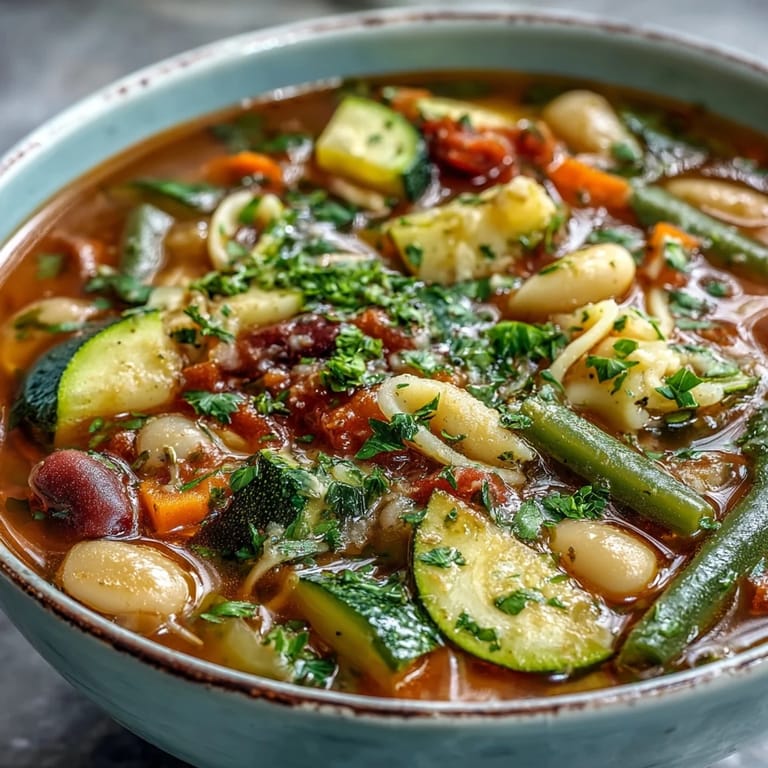
 Save to Pinterest
 The first time the rain actually felt cozy was when I decided to clear out the crisper drawer for a soup. I remember the rhythmic sound of dicing carrots while the windows fogged up from the heat of the stove. It started as a way to use up a lonely zucchini but it turned into a colorful bubbling mess that filled the whole apartment with the smell of basil. There is something grounding about watching tiny pasta swell up in a rich tomato broth. This soup is less of a rigid recipe and more of a conversation with whatever vegetables happen to be in season.
One evening I accidentally added twice the amount of garlic because the cloves were much larger than they looked. Instead of ruining the soup the house smelled like a dream and it was the best mistake I ever made. We sat on the floor with bowls in our laps dipping thick crusty bread into the broth until the pot was scraped dry. Now whenever I see a bunch of kale or a stray squash I immediately reach for my heavy soup pot. It has become my go to method for turning a stressful day into a quiet evening.
Ingredients
- Olive oil: This fat carries the flavor of the aromatics from the start and helps them soften perfectly.
- Onion carrots and celery: This trio is the foundation of everything good in a soup pot and creates a deep base of flavor.
- Seasonal vegetables: Use zucchini in the heat of summer or butternut squash when the leaves start to turn for a seasonal twist.
- Garlic: Smash it fresh rather than using the jarred kind to get that punchy aroma that defines the dish.
- Diced tomatoes: These add the necessary acidity to balance out the earthy beans and sweet carrots.
- Potato: A peeled potato releases just enough starch to make the broth feel velvety and thick.
- Vegetable broth: Keep a high quality stock on hand so the base feels rich and savory throughout.
- Cannellini beans: These little white beans turn wonderfully creamy when they hit the hot liquid and provide great protein.
- Small pasta: Ditalini or small shells are perfect because they fit right onto your spoon with every bite.
- Dried herbs: Rub the oregano and basil between your palms to wake up the oils before tossing them into the pot.
- Fresh parsley: Adding this at the very end brings a bright pop of color and life to the final bowl.
- Parmesan cheese: Grating a bit over the top creates a salty melt that ties all the flavors together.
Tired of Takeout? 🥡
Get 10 meals you can make faster than delivery arrives. Seriously.
One email. No spam. Unsubscribe anytime.
Instructions
- Softening the base:
- Warm the oil and listen for that gentle sizzle as the onion and carrots begin to turn translucent. The smell will immediately make your kitchen feel like a professional Italian kitchen.
- Building layers:
- Stir in the zucchini and greens watching as the colors intensify against the bottom of the pot. Cook them just long enough to let their natural juices start to release.
- Simmering the broth:
- Pour in the broth and tomatoes then let the liquid reach a happy bubble before turning down the heat. This quiet bubbling is where all the different vegetable flavors start to introduce themselves to one another.
- Cooking the pasta:
- Toss in the beans and pasta checking occasionally until the noodles are tender but still have a bit of bite. Remember that the pasta will continue to cook slightly even after you turn off the flame.
- Final seasoning:
- Scatter the herbs and salt over the surface noticing how the steam suddenly smells like an herb garden. Remove the bay leaf and give it one last gentle stir to combine everything.
- Serving the bowls:
- Ladle the thick soup into deep bowls and watch the Parmesan disappear into the hot broth. Serve it while it is steaming for the maximum comfort effect.
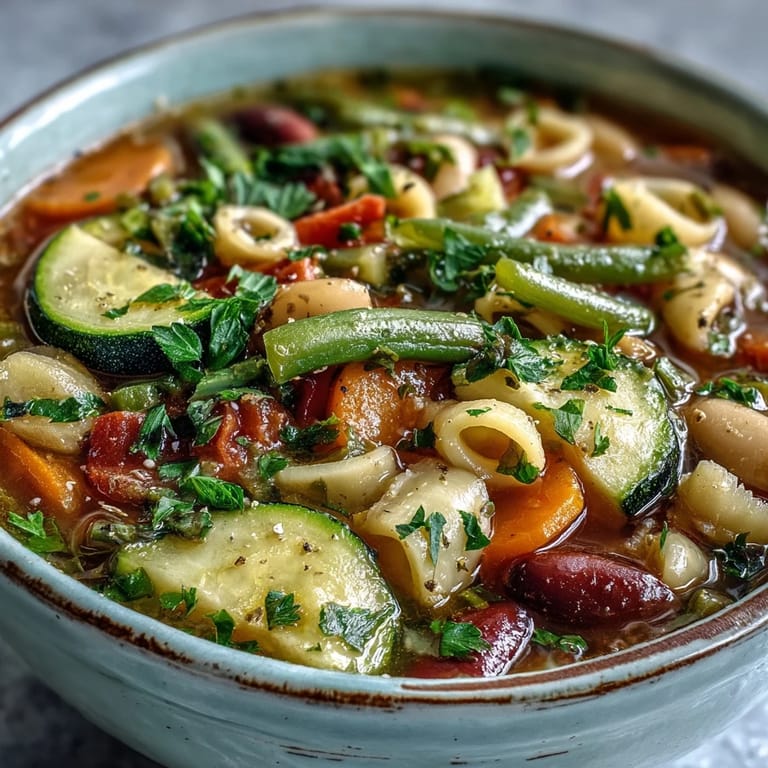 Save to Pinterest
 My favorite part is always the next day when the leftovers have thickened into something almost like a stew. I once shared a thermos of this in a cold park and even lukewarm it felt like a total feast. It is the kind of food that tastes like care and patience regardless of the temperature. Every time I make a batch I feel like I am stocking up on little moments of peace for the week ahead.
Choosing Your Seasonal Stars
In the spring I love throwing in handfuls of bright green peas or chopped leeks for a lighter and fresher feel. Winter calls for the heartiness of savoy cabbage or chunks of sweet potato that melt into the tomatoes. You should let the market guide you and choose whatever looks most vibrant that day.
The Secret Power of the Rind
If you have a hard piece of cheese leftover do not toss it in the bin. Dropping that rind into the broth as it simmers acts like a magic flavor booster that gives the soup a rich savory backbone. It is a traditional trick that makes the broth taste like it has been simmering for hours longer than it has.
Serving and Storage Suggestions
This soup stores beautifully in the fridge for several days making it the ultimate meal prep win for busy weeks. It actually tastes better on the second day as the herbs have more time to infuse into the beans. Always keep a little extra liquid nearby when you go to reheat your portion.
- Keep extra broth on hand for reheating since the pasta continues to absorb liquid as it sits.
- A final drizzle of extra virgin olive oil right before eating adds a luxurious and silky finish.
- Always remove that bay leaf before serving so no one gets a crunchy and unpleasant surprise.
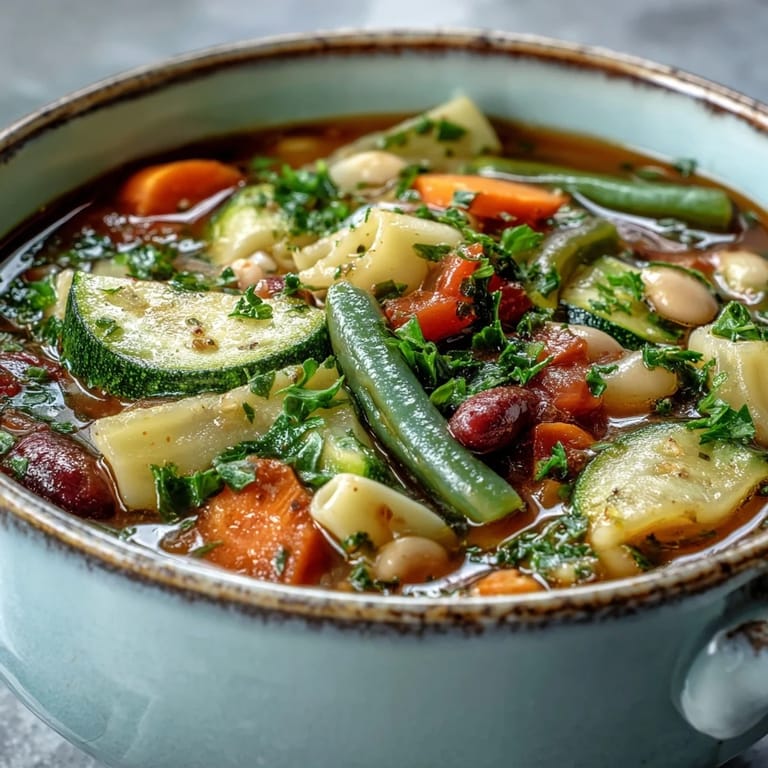 Save to Pinterest
 This soup is a living thing that changes with your mood and your pantry availability. I hope it brings as much warmth to your table as it has to mine over the years.
Recipe FAQs
- → What vegetables work best in minestrone?
Classic options include zucchini, green beans, carrots, celery, and tomatoes. For winter variations, try butternut squash, kale, spinach, or savoy cabbage. Spring welcomes peas and leeks, while summer shines with fresh tomatoes and bell peppers. The key is cutting everything into similar-sized pieces for even cooking.
- → Can I make this soup gluten-free?
Absolutely. Simply substitute gluten-free pasta for traditional wheat varieties. Rice-based pasta, corn pasta, or chickpea pasta all work beautifully. Double-check that your vegetable broth and any seasonings are certified gluten-free as well.
- → How do I prevent the pasta from becoming mushy?
Cook the pasta directly in the soup for the last 10-12 minutes, then serve immediately. If planning to store leftovers, cook pasta separately and add individual portions when reheating. Alternatively, use smaller shapes like ditalini or shells that hold their texture well in liquid.
- → What's the best way to add more protein?
Beyond the cannellini beans, consider adding a Parmesan rind while simmering for savory depth. For heartier versions, stir in shredded chicken or browned ground turkey. Extra beans like kidney or chickpeas also work well.
- → Can I freeze this soup?
Yes, though it's best to freeze without the pasta. Cook and cool the vegetable base completely, then transfer to airtight containers or freezer bags for up to 3 months. When ready to serve, thaw overnight in the refrigerator, reheat gently, and cook fresh pasta directly in the soup.
- → What's the secret to deeper flavor?
Take time to properly sauté the onion, carrot, and celery base until softened—this builds aromatic foundation. Adding a Parmesan rind during simmering imparts subtle richness. Finish with a drizzle of quality extra virgin olive oil and fresh herbs just before serving to brighten flavors.