 Save to Pinterest
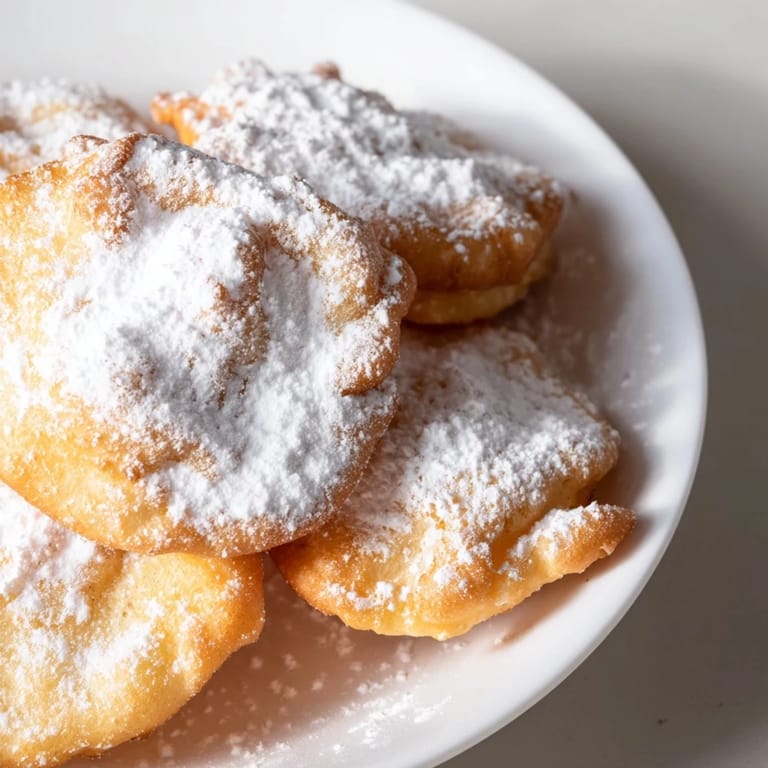
 I was seven years old at the county fair when my grandmother handed me a warm piece of fried dough dusted with sugar, and I understood instantly why people lined up for these things. The outside crackled between my teeth while the inside stayed impossibly soft, and I remember the sugar coating my fingers, my chin, probably my entire face. Years later, I realized I could make them at home—no fair required, no waiting in line—just a bowl, a skillet, and that same magic that made my grandmother smile.
My husband once suggested we make these for our friends on a lazy Sunday, and what started as a simple afternoon turned into everyone crowding around the kitchen, wanting to fry their own piece. We went through all eight pieces in minutes, laughing about who got the puffy one or the perfectly crispy edge, and suddenly this simple recipe became the thing people asked us to make again.
Ingredients
- All-purpose flour: The foundation—make sure it's fresh and unsifted for the right texture.
- Baking powder: This is what makes the dough puff into those light, airy pillows when it hits hot oil.
- Salt: Just a pinch to balance the sweetness and enhance the subtle flavors.
- Granulated sugar: Adds a touch of sweetness to the dough itself, not just the topping.
- Unsalted butter: Softened so it blends smoothly and creates a tender crumb.
- Whole milk: Brings everything together into a dough that's soft but not sticky.
- Vegetable oil: Use a neutral oil with a high smoke point—you need it to reach 350°F without burning.
- Powdered or granulated sugar: For dusting warm fried dough—powdered sugar looks fancier but either works.
- Honey: Optional but transforms these into something more elegant if you're feeling fancy.
Tired of Takeout? 🥡
Get 10 meals you can make faster than delivery arrives. Seriously.
One email. No spam. Unsubscribe anytime.
Instructions
- Mix the dry foundation:
- Whisk flour, baking powder, salt, and sugar together in a large bowl. This ensures the leavening is evenly distributed so every piece puffs the same way.
- Cut in the butter:
- Add softened butter and work it in with your fingertips or a pastry cutter until it looks like coarse breadcrumbs. Don't overmix or the dough gets tough.
- Bring it together:
- Slowly pour in the milk while stirring gently until a soft, shaggy dough forms. It should be slightly sticky to the touch but hold together.
- Knead gently:
- Turn the dough onto a lightly floured surface and knead for about one minute—just enough to smooth it out. Over-kneading makes it dense.
- Divide and shape:
- Divide the dough into 8 equal pieces. Roll or pat each into a disc about 1/4 inch thick, roughly the size of your palm. Uniform thickness means they all cook evenly.
- Heat the oil:
- Pour oil into a deep skillet or heavy pot and heat to 350°F (175°C). If you don't have a thermometer, test with a small piece of dough—it should sizzle immediately and float up within seconds.
- Fry to golden:
- Carefully place one disc in the hot oil and fry for 1 to 2 minutes per side until golden brown and puffed. It'll rise to the surface and float—that's when you flip it. Don't crowd the pan or the temperature drops.
- Drain and finish:
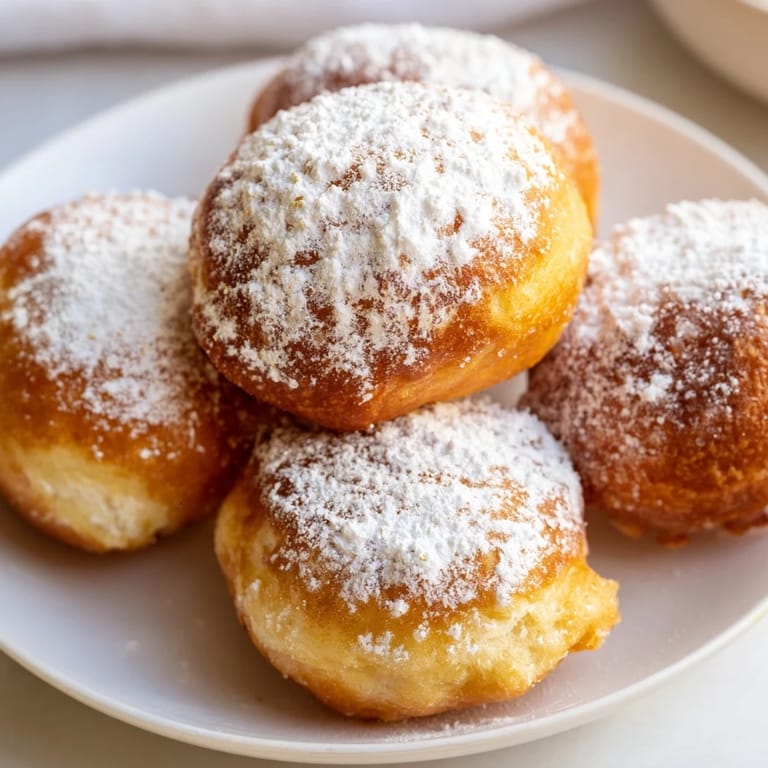
- Use a slotted spoon or tongs to transfer the fried dough to paper towels. While still warm, dust generously with sugar or drizzle with honey. The warmth helps everything stick.
 Save to Pinterest
 There was one morning when my kids came downstairs to the smell of fried dough, and their faces lit up like I'd made something far more impressive than it actually was. That's the real magic of this recipe—it turns a simple kitchen moment into something memorable, something that tastes like fair days and handmade treats and love.
The Oil Temperature Question
I learned this the hard way by making a batch that tasted like a greasy sponge. The oil needs to be 350°F, not a degree less or more if you can help it. If you have a kitchen thermometer, use it. If not, a wooden spoon handle dipped in the oil should sizzle immediately and stay that way—it's the difference between fried dough and sad fried disappointment.
What Makes These Different From Donuts
Fried dough and donuts are cousins, not twins. Fried dough is simpler—no yeast, no overnight rising, no glaze that hardens as it cools. It's meant to be eaten warm and immediately, dusted with whatever sugar you grabbed from the pantry. You get that delicate interior and crispy exterior, but it's a fleeting texture that disappears in your mouth, not a rich, chewy donut experience.
Variations and Serving Ideas
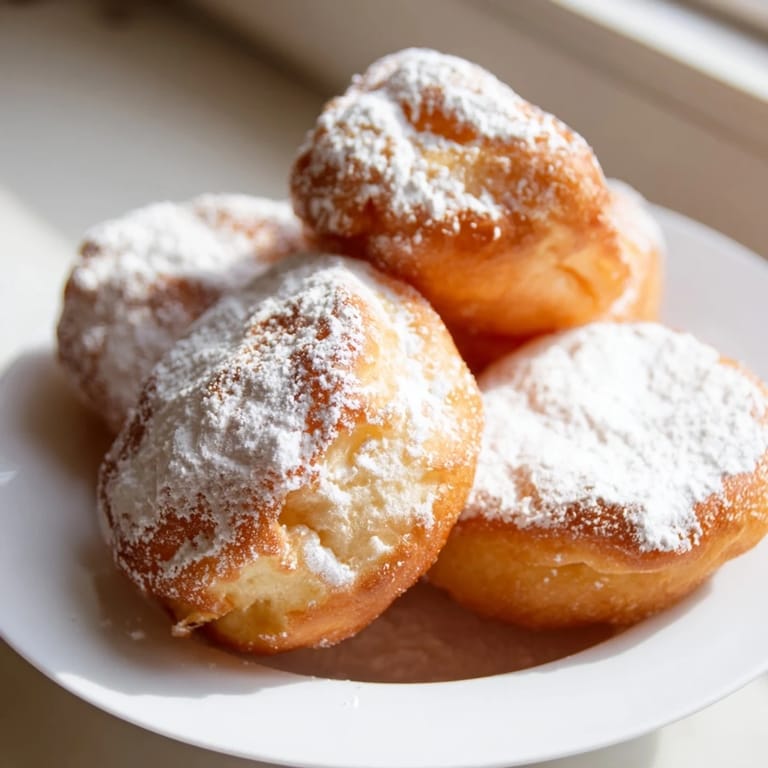
The beauty of fried dough is how adaptable it is. Serve it plain with powdered sugar for a classic fair experience, or get creative with toppings and dipping sauces. Your guests will appreciate the warmth and the simplicity, and you'll love how little effort this takes.
- Dust with cinnamon sugar instead of plain sugar for a subtle warmth that feels more intentional.
- Drizzle with honey and sprinkle with sea salt for a sweet-salty combination that feels fancy.
- Serve alongside chocolate sauce, fruit preserves, or even a little cup of honey for dipping.
 Save to Pinterest
 This is the kind of recipe that reminds you why you enjoy cooking in the first place—something warm, something shared, something that brings people back to childhood in a single bite. Make these, and watch what happens.
Recipe FAQs
- → What is the best oil for frying?
Use vegetable oil with a high smoke point to ensure even frying and crisp texture.
- → How do I know when the dough is cooked?
Fry each piece until it’s puffed and a deep golden brown, usually 1–2 minutes per side.
- → Can I add flavors to the topping?
Yes, adding cinnamon to the sugar or drizzling with honey enhances the flavor beautifully.
- → How thick should I roll the dough?
Roll or pat the dough into discs about 1/4 inch thick for optimal frying and texture.
- → How do I prevent greasy fried dough?
Maintain oil temperature around 350°F (175°C) and avoid overcrowding the pan to prevent sogginess.