 Save to Pinterest
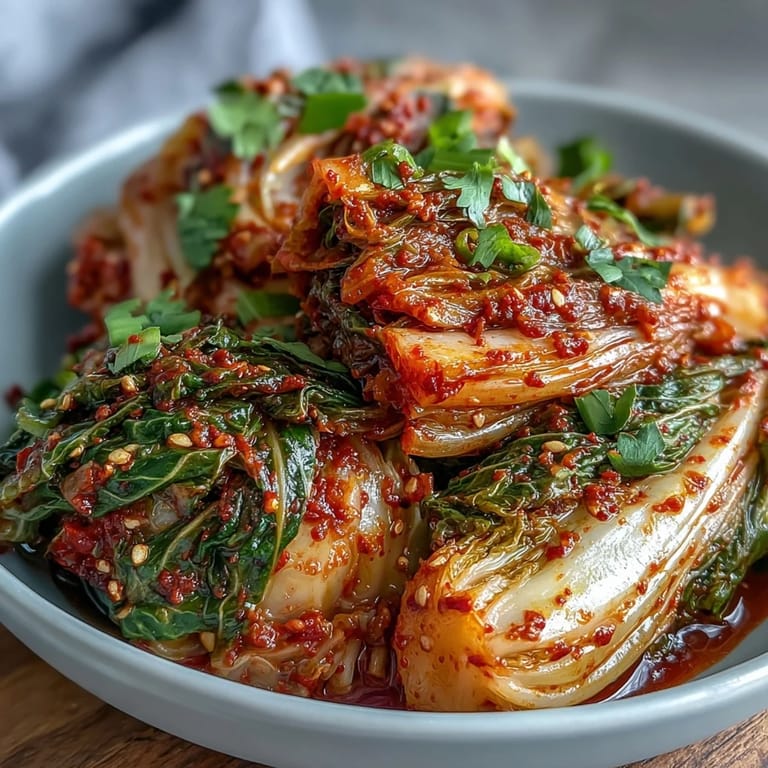
 My kitchen filled with the sharp, garlicky smell of fermenting cabbage one autumn afternoon, and I realized I'd been intimidated by kimchi for no good reason. A friend had left a jar on my counter months earlier, and watching it bubble and transform into something so alive made me curious enough to try making it myself. The first batch wasn't perfect, but biting into that tangy, spicy crunch felt like unlocking a secret. Now I can't imagine my fridge without a jar tucked in the corner, waiting to brighten whatever I'm eating.
I made this for a potluck once, bringing a small jar alongside some rice and leftover roasted chicken, and watched people's faces light up the moment they tasted it. Someone asked for the recipe that night, and honestly, sharing it felt like passing along something more valuable than just instructions. That's when I understood kimchi isn't just food; it's a conversation starter, a comfort ritual, and proof that patience in the kitchen pays off.
Ingredients
- 1 large napa cabbage (about 1.2 kg / 2.5 lbs): The backbone of your kimchi; look for one that feels heavy for its size and has tightly packed leaves with no brown spots or soft patches.
- 1 medium daikon radish (about 200 g), julienned: This adds a crisp, slightly sweet bite that contrasts beautifully with the heat and funk of fermentation.
- 4 scallions, sliced: They soften during fermentation but keep their gentle onion notes alive throughout.
- 1 medium carrot, julienned (optional): I skip this sometimes, but when I include it, the sweetness mellows the spice slightly.
- 80 g (1/3 cup) coarse sea salt: This pulls moisture from the vegetables and creates the brine that protects them during fermentation; don't skimp or substitute table salt, which tastes metallic here.
- 1.5 liters (about 6 cups) cold water: Use filtered water if your tap water is heavily chlorinated, as chlorine can slow fermentation.
- 6 cloves garlic, minced: Fresh, pungent garlic is non-negotiable; old, sprouted garlic will make the kimchi taste flat and dusty.
- 1 thumb-sized piece fresh ginger, peeled and minced: The warmth of ginger rounds out the heat and adds a subtle sweetness that deepens as it ferments.
- 1 small onion, roughly chopped: This gets blended into the paste and mellows into an underlying sweetness that balances everything.
- 3 tbsp fish sauce (or soy sauce for vegan): This is the umami bomb that makes kimchi taste like kimchi; use good-quality fish sauce, as cheap versions taste tinny.
- 1 tbsp sugar: A pinch of sweetness feeds the fermentation and balances the salt and spice.
- 3–5 tbsp Korean red chili flakes (gochugaru), to taste: Buy this from a Korean market or online if you can; supermarket substitutes often contain other spices and won't give you that true kimchi heat and color.
- 2 tbsp rice flour: This thickens the paste slightly and helps it cling to the vegetables, plus it feeds the beneficial bacteria during fermentation.
- 150 ml (2/3 cup) water: Use it to make the rice flour paste, which acts as a thickening agent and fermentation food source.
Tired of Takeout? 🥡
Get 10 meals you can make faster than delivery arrives. Seriously.
One email. No spam. Unsubscribe anytime.
Instructions
- Prep and cut your cabbage:
- Slice your napa cabbage lengthwise into quarters, then chop the quarters into bite-sized 2-inch pieces. You want them small enough to fit easily in your mouth but large enough that they won't disappear into mush during fermentation.
- Make a salt brine and soak:
- Dissolve the sea salt into your cold water in a large non-reactive bowl (glass or ceramic work best; metal can interact weirdly with the fermentation). Add your cabbage pieces and toss everything together so every leaf gets coated, then weight the cabbage down with a plate and something heavy so it stays submerged under the brine. Leave it for 2 hours, tossing every 30 minutes so the salt penetrates evenly.
- Rinse away the excess salt:
- After 2 hours, you'll notice the cabbage has released a ton of liquid and become limp. Rinse it thoroughly under cold water 2 to 3 times, squeezing gently to remove excess salt; this is crucial or your kimchi will taste like a salt lick. Drain it well and set aside.
- Create your spice paste foundation:
- In a small saucepan over medium heat, whisk your rice flour with 150 ml of water, stirring constantly until the mixture thickens slightly, which takes about 1 to 2 minutes. You want it the consistency of thick porridge, not lumpy soup. Let it cool completely before moving on.
- Blend your aromatics and spice:
- Once the rice paste is cool, combine it in a blender with your minced garlic, ginger, chopped onion, fish sauce, and sugar. Blend until completely smooth and pale, then stir in your gochugaru by hand to your desired heat level. If you add it while blending, some of the volatile compounds escape and you lose spice intensity.
- Massage everything together:
- In a large bowl, combine your drained cabbage with the daikon, carrot if using, and scallions. Pull on your kitchen gloves and pour the spice paste over top, then massage everything together with your hands like you're kneading dough. You want every piece of vegetable coated in that rust-colored paste; this usually takes 5 to 10 minutes and feels meditative.
- Pack your jars and set up for fermentation:
- Transfer your massaged kimchi into clean glass jars or a fermentation crock, pressing down firmly as you go to eliminate air pockets and encourage the vegetables to release their liquid. Leave at least an inch of headspace at the top because the fermentation will create pressure and potentially bubble over.
- Ferment at room temperature:
- Seal the jars and leave them on your counter, away from direct sunlight, for 1 to 2 days. Each day, open the lid and let any built-up gas escape (people call this burping); you'll hear a satisfying hiss and smell that funky, garlicky aroma. This prevents the pressure from building too much and lets you monitor the taste.
- Taste and decide when it's ready:
- After 48 hours, open a jar and taste a piece. If it's developed a pleasant sourness and tangy flavor, move it to the refrigerator where fermentation slows dramatically. The cold won't stop the fermentation entirely, so your kimchi will keep developing and deepening in flavor for weeks.
 Save to Pinterest
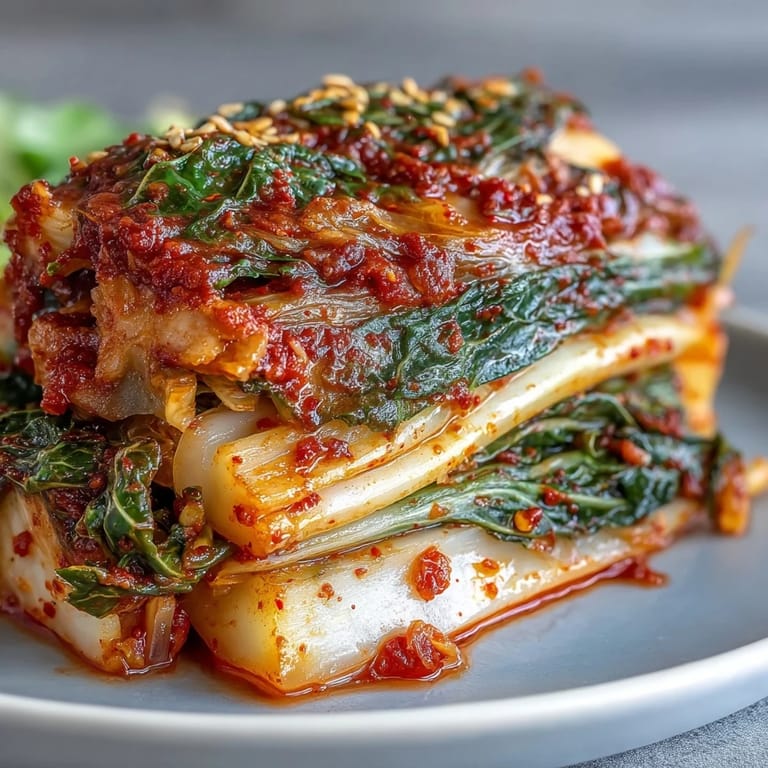
 My mom tried the first batch I made and got so quiet I thought something was wrong, but then she smiled and said it tasted like the kimchi her grandmother used to make. That moment made all the chopping and waiting feel worthwhile. Knowing that food could carry memory and love like that changed how I think about cooking.
The Fermentation Process Explained
Fermentation is where the real magic happens, and it's more forgiving than you'd think. The lactic acid bacteria naturally present on the vegetables and in the environment start multiplying once you've created the perfect environment: salty, anaerobic (airless), and cool enough that unwanted bacteria can't thrive. You'll notice the liquid becomes cloudy, the smell gets funkier and more complex, and the vegetables soften slightly while maintaining their crunch. The longer it ferments, the more sour and developed the flavor becomes, which is why some people prefer kimchi aged for weeks while others like it younger and fresher.
Storing and Serving Your Kimchi
Once your kimchi has reached the sourness you love, move it to the refrigerator where it'll keep for months. The cold dramatically slows fermentation, but it doesn't stop completely, so the flavor will continue to deepen slowly. I've kept jars for four months and loved them even more than the first week. Serve it alongside rice and eggs for breakfast, chop it into fried rice, use it as a topping for crispy tofu, or eat it straight from the jar as a palate-cleansing snack between bites of richer food.
Troubleshooting and Variations
If your kimchi tastes too spicy, you either added too much gochugaru or your fermentation temperature was warm, speeding up the flavor development. Next time, reduce the chili flakes or add grated apple or pear to the paste for natural sweetness that mellows the heat. If it smells off (like rotten eggs rather than pungent funk), something went wrong with your sanitation or there's mold involved; trust your instincts and toss it. For a milder version, some people add a grated pear or apple to the spice paste, which adds body and sweetness without diluting the fermentation.
- Vegan version: Use soy sauce or dedicated vegan fish sauce instead of the regular fish sauce, and the rest of the recipe stays exactly the same.
- Gentler heat: Start with 2 tbsp gochugaru instead of 3 to 5, and taste as you go since you can always add more but can't take it out.
- Longer shelf life: Make sure your jars are completely clean and dry before packing, as any moisture or residue can introduce unwanted microbes.
 Save to Pinterest
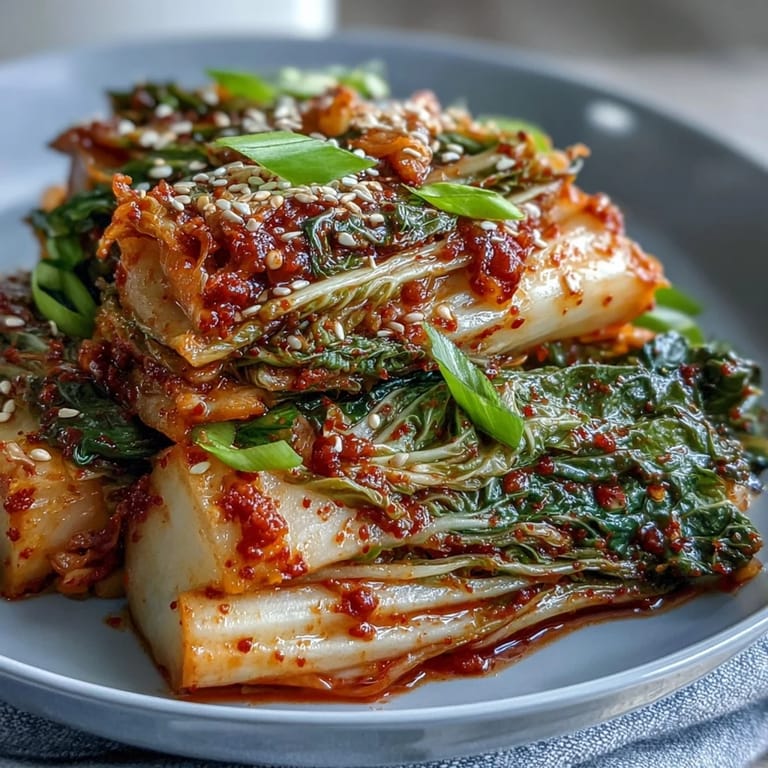
 Making kimchi is less about following rules perfectly and more about understanding what's happening and trusting your senses. Once you've made it once, you'll feel confident enough to tweak it, play with it, and make it your own.
Recipe FAQs
- → How long does kimchi fermentation take?
Initial fermentation requires 1-2 days at room temperature. During this period, burp jars daily to release built-up gases. After achieving desired tanginess, refrigerate to slow the process. Kimchi continues developing deeper, more complex flavors for several weeks in cold storage.
- → What makes kimchi so spicy?
Korean red chili flakes called gochugaru provide the signature heat and vibrant red color. Adjust the amount from 3-5 tablespoons based on your spice preference. The chili powder's smoky, slightly sweet profile creates distinctive flavor notes beyond simple heat.
- → Can I make kimchi vegan?
Replace traditional fish sauce with soy sauce or specialized vegan fish sauce alternatives. The substitution maintains the savory umami depth while keeping the preparation entirely plant-based. Always verify all ingredients, including processed sauces, meet vegan standards.
- → Why do I need to salt cabbage first?
Salting draws moisture from cabbage leaves through osmosis, creating the brine needed for fermentation. This process softens the crisp vegetable texture while preparing cellular structures to absorb the spicy seasoning paste. Thorough rinsing removes excess salt before mixing.
- → How do I know when kimchi is ready to eat?
Taste after 48 hours of room temperature fermentation. Look for tangy, slightly sour flavors and gentle effervescence indicating active fermentation. The cabbage should be tender but retain some crunch. Transfer to refrigeration once the flavor profile reaches your preferred balance.
- → What dishes pair well with kimchi?
Serve alongside steamed rice and fried eggs for a classic Korean breakfast. Incorporate into soups like kimchi jjigae, stir-fry with rice, or top savory pancakes. The bold flavors complement rich meats, noodles, and mild grains while adding probiotic benefits.