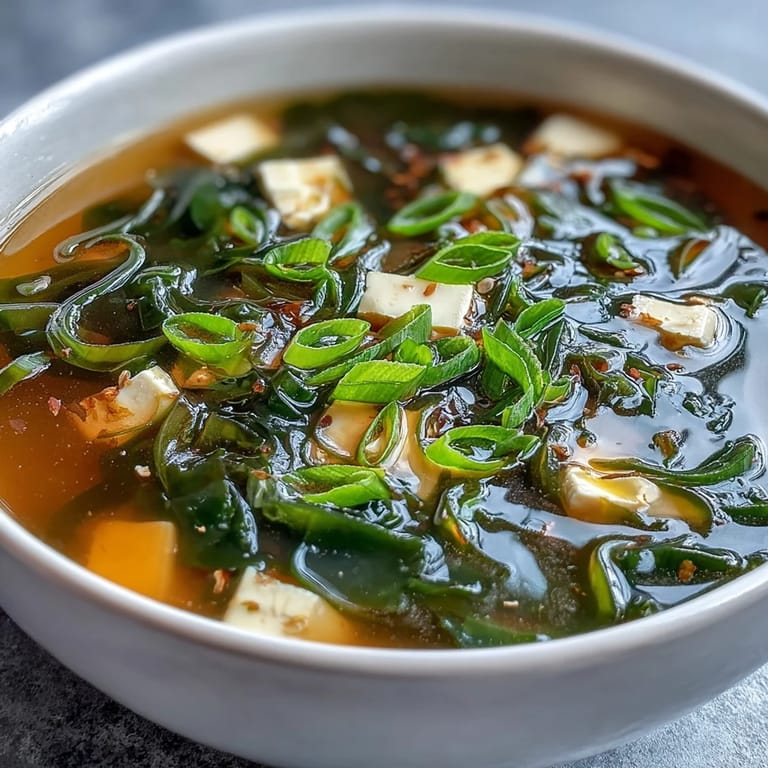
 Save to Pinterest
 My first bowl of wakame soup arrived on a quiet Tuesday morning at a small café in Kyoto, steam rising from a delicate ceramic bowl. The simplicity of it struck me—just a few ingredients suspended in clear broth, yet somehow it felt like the essence of comfort itself. Years later, I discovered how easy it was to recreate that moment at home, and now this soup appears in my kitchen whenever I need something nourishing without fuss.
I made this soup for my partner during the first week of their new job, when they came home exhausted and skeptical about dinner plans. Twenty minutes later, watching them lean over the bowl with their shoulders finally relaxed, I realized this quiet dish had somehow communicated care better than anything elaborate could have.
Ingredients
- Dried wakame seaweed (8 g): Don't let the small amount fool you—it expands beautifully when rehydrated and carries a subtle oceanic flavor that somehow tastes both foreign and familiar.
- Dashi stock (4 cups): This is the backbone of everything; vegetarian dashi made with kombu and shiitake works wonderfully if you're avoiding fish-based versions.
- Silken or firm tofu (100 g): Silken tofu dissolves slightly into the broth and feels luxurious on your tongue, while firm tofu keeps its shape for a different textural experience.
- Scallions (2, thinly sliced): Save these for garnish—their fresh bite right before serving brings the whole bowl to life.
- White miso paste (2 tbsp): This is crucial: never boil miso directly, or you'll destroy its living cultures and complex flavor will turn flat and sharp.
- Soy sauce (1 tsp): Use tamari or a certified gluten-free brand if that matters for your kitchen; it adds a final whisper of saltiness.
- Sesame oil (1 tsp, optional): A drizzle right before serving adds an unexpected warmth that makes people wonder what you're hiding.
Tired of Takeout? 🥡
Get 10 meals you can make faster than delivery arrives. Seriously.
One email. No spam. Unsubscribe anytime.
Instructions
- Rehydrate the wakame gently:
- Pour cold water over the dried seaweed in a small bowl and let it sit for five minutes—you'll watch it transform from brittle strands into tender ribbons. Drain it well so you're not adding excess water to your broth.
- Bring the dashi to life:
- Pour your stock into a medium saucepan and let it warm over medium heat until you see gentle bubbles breaking the surface. This slow approach means the flavors have time to open up rather than being shocked into bitterness.
- Introduce tofu and wakame:
- Add your cubed tofu and drained wakame to the simmering broth and let them warm together for two to three minutes—you're not cooking here, just bringing everything to the same temperature so flavors can mingle. The tofu will stay tender and the wakame won't toughen.
- Temper the miso into submission:
- This step matters: take a ladle of hot broth and whisk it together with your miso paste in a separate bowl until completely smooth, then stir this mixture back into the pot. Doing this prevents lumpy paste from ruining your texture and keeps the beneficial enzymes intact.
- Season and finish with restraint:
- Add soy sauce and sesame oil if using, stir gently, and let everything warm together for just one more minute without letting it boil. Boiling now would damage everything you've built.
- Serve with intention:
- Pour into bowls and crown each one with those sliced scallions so they stay bright and crisp. The heat will wilt them slightly as you eat, adding texture as you go.
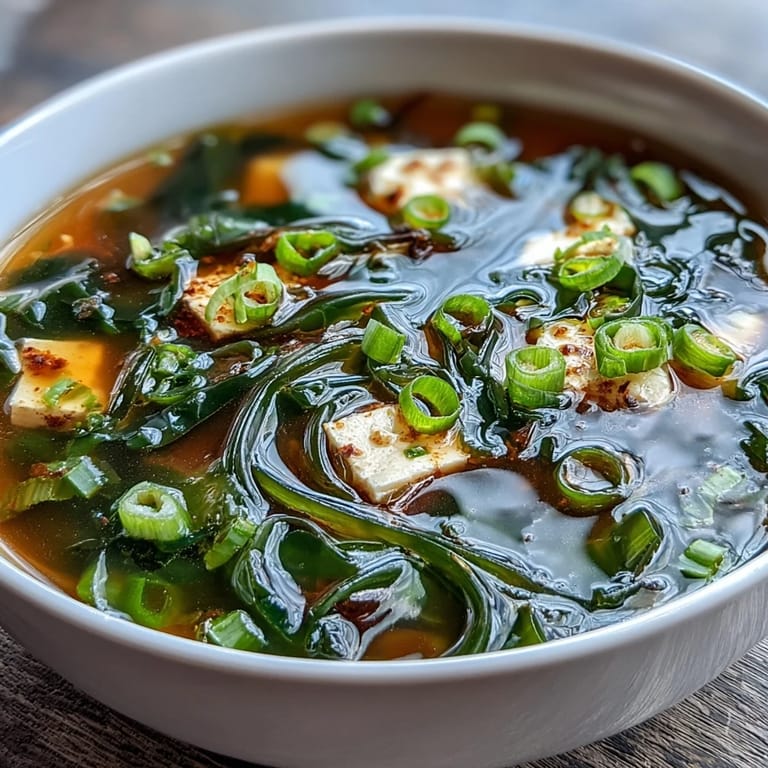 Save to Pinterest
 There's something almost meditative about ladling this soup into bowls and watching people pause before eating, inhaling the steam like they're trying to solve a puzzle. In that moment before the first spoonful, soup becomes less about nutrition and more about a small ritual of slowing down.
The Magic of Dashi
Dashi is Japanese cooking's quiet secret—a broth so pure and clean that it makes you wonder why you ever bothered with store-bought stock. The vegetarian version using kombu seaweed and dried shiitake is equally magnificent; I've converted several fish-broth devotees just by letting them taste the earthy sweetness that emerges from these humble ingredients simmered together. Once you make dashi at home, you'll find yourself reaching for it in soups you never imagined it could enhance.
Variations That Still Honor the Original
This soup is forgiving in the most generous way—you can add sautéed mushrooms, thinly sliced carrots, or handfuls of spinach without disrupting its essential character. I once added leftover roasted broccoli out of desperation and created something entirely new that somehow still tasted authentically Japanese, which taught me that the dashi and miso are strong enough anchors to hold whatever you want to build around them.
Serving Suggestions and Pairing Thoughts
This soup is never just a side dish in my kitchen—it's the opening movement of a larger composition. Serve it as the first course before a main, or pair it with steamed rice and some pickled vegetables to create a light but complete meal that feels intentional rather than thrown together.
- A bowl of this soup alongside sushi rice transforms both into something greater than they are separately.
- Leftover soup keeps beautifully for two days in the refrigerator, though the scallions will fade so add fresh ones when reheating.
- If you're meal prepping, make the broth ahead and add tofu and wakame just before serving to keep textures from becoming muddled.
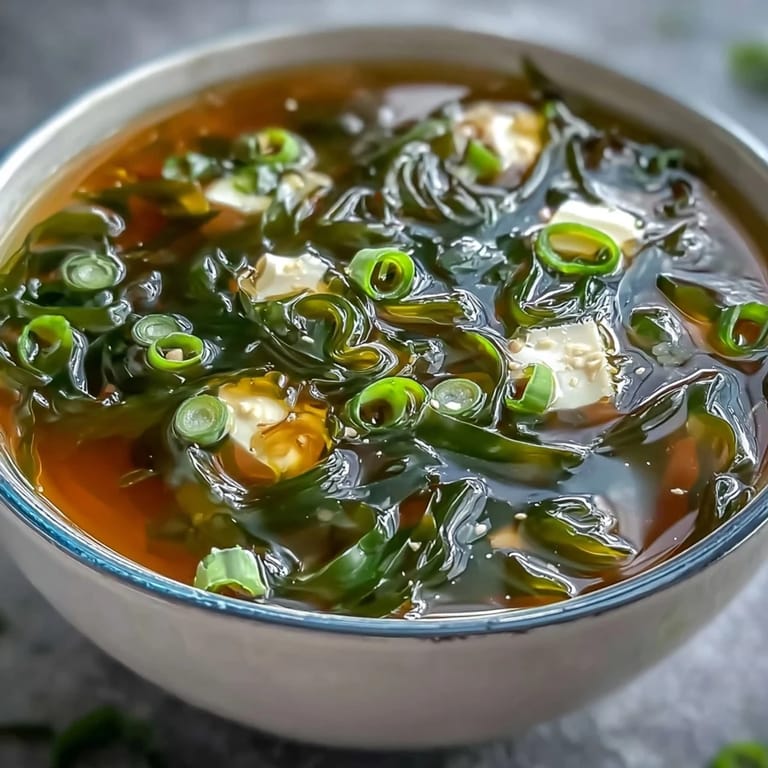 Save to Pinterest
 This soup taught me that simplicity isn't laziness—it's clarity. When you respect good ingredients and technique without overcomplicating things, something quietly profound emerges.
Recipe FAQs
- → What does wakame taste like?
Wakame has a mild, slightly sweet flavor with a tender texture. It absorbs the flavors of the broth while adding a subtle ocean essence and silky mouthfeel to the soup.
- → Can I use instant dashi instead of homemade?
Yes, instant dashi powder works well for convenience. Dissolve it in hot water according to package instructions. For the most authentic flavor, homemade kombu or vegetarian dashi provides superior depth.
- → Why shouldn't I boil the miso?
Boiling miso paste destroys its beneficial enzymes and can make the taste bitter. Always whisk miso into warm broth off the heat, or add it at the very end just before serving to preserve its delicate flavor.
- → How do I store leftover wakame soup?
Store cooled soup in an airtight container in the refrigerator for up to 2 days. Reheat gently over low heat without boiling. The tofu and wakame may soften further but will remain delicious.
- → What can I add for more protein?
Consider adding edamame, cooked shrimp, or shredded chicken. Extra firm tofu holds its shape well. For a vegan protein boost, add cooked adzuki beans or white beans during the simmering stage.
- → Is wakame soup gluten-free?
Traditional wakame soup is naturally gluten-free when made with gluten-free soy sauce and vegetarian dashi. Always check labels on miso paste and soy sauce, as some brands contain wheat or barley additives.